

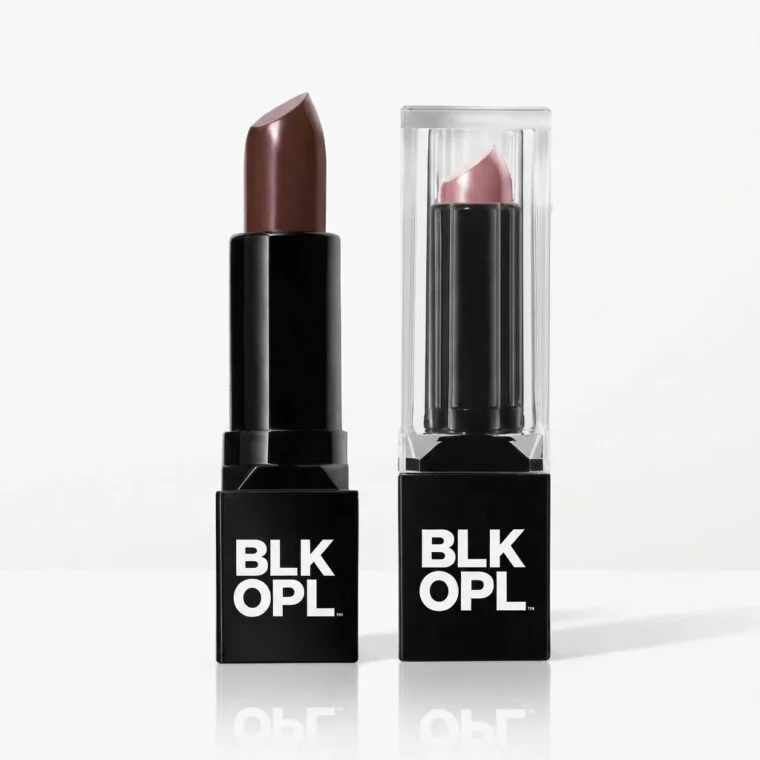
COLORSPLURGE Risqué Crème Lipstick
BLK/OPL COLORSPLURGE Risqué Crème Lipstick combines saturated lip color with the softer glide of a traditional crème formula. Instead of creating the dry, powdery appearance associated with some matte lipsticks, it uses an emollient-and-wax base designed to leave the lips looking smooth while depositing rich color.
The current 0.11 oz format is paraben-free, and BLK/OPL describes the lipstick as hydrating and cruelty-free. Its published formula includes castor seed oil, squalane, sunflower seed oil, candelilla and carnauba waxes, ceramide 2, tocopherol derivatives, and a range of shade-dependent pigments.
For shoppers building a wider lip-color routine, this lipstick sits naturally within HotScope’s Makeup collection, where different finishes and lip formats can be compared without treating every color product as interchangeable.
COLORSPLURGE Risqué Crème Lipstick Features
- Brand: BLK/OPL
- Product type: Bullet lipstick
- Finish: Creamy, color-rich finish
- Size: 0.11 oz
- Color payoff: High pigment
- Texture: Smooth crème
- Formula positioning: Hydrating
- Parabens: Paraben-free
- Cruelty-free: Listed as cruelty-free by BLK/OPL
- Fragrance: Present in the published ingredient list
- Notable formula components: Castor seed oil, squalane, sunflower seed oil, ceramide 2 and vitamin derivatives
- Colorants: Vary according to shade
The current Ulta listing describes the lipstick as capable of depositing intense creamy color in one sweep and lists seven color options on the product page, although shade availability can change.
Creamy Pigment Without A Flat Matte Finish
The most useful distinction with COLORSPLURGE Risqué Crème Lipstick is its balance between pigment and slip.
A highly pigmented lipstick does not necessarily have to be matte. Here, the pigment system sits inside a formula containing oils, esters and waxes that help the lipstick move across the lip surface instead of feeling like a dry powder coating.
That makes it different from HotScope’s Velvet Matte Lipstick, which is better suited to shoppers specifically seeking a softer matte appearance. A crème lipstick generally retains more visible sheen and surface movement, whereas matte formulas are designed to reduce reflectivity.
COLORSPLURGE can therefore work particularly well when the aim is a defined, polished lip with noticeable color but without committing to an ultra-flat finish.
What Creates The Smooth Crème Texture?
The published ingredient list reveals why the lipstick behaves differently from a thin tint or liquid color.
Isostearyl isostearate appears first in the current formula. This emollient contributes slip and helps create a smoother cosmetic feel.
Castor seed oil is another prominent ingredient. Castor oil is commonly used in lip products because its thick consistency works well in pigment-rich formulas and contributes gloss and spreadability.
Caprylic/capric triglyceride, isostearyl palmitate and pentaerythrityl tetraisostearate further support the emollient portion of the lipstick, helping balance the harder structural waxes.
That combination matters. A bullet lipstick has to remain solid enough to hold its shape in the tube while becoming sufficiently mobile when it contacts the lips. The interaction between waxes, oils and emollients helps create that balance.
The Wax Structure Behind The Lipstick Bullet
COLORSPLURGE contains several structural ingredients, including microcrystalline wax, candelilla wax, carnauba wax and paraffin.
Candelilla and carnauba are relatively firm plant-derived waxes. They contribute hardness and help a traditional lipstick retain its bullet shape. Microcrystalline wax can also improve structure and consistency, while the softer emollient ingredients prevent the finished formula from behaving like a hard wax stick.
The result is a formula designed to soften at the surface during application without losing the shape needed for precise lipstick placement.
That construction also explains why lipstick storage matters. Leaving a bullet lipstick in prolonged high heat can soften its wax structure even when there is nothing wrong with the formula itself.
Squalane, Sunflower Oil And Ceramide 2
There is more happening in this formula than pigment suspended in wax.
Squalane is included as an emollient that contributes to a smooth, conditioned skin feel. Sunflower seed oil provides another lipid component, while ceramide 2 appears farther down the ingredient list.
The formulation also includes tocopheryl acetate and tocopherol, both forms associated with vitamin E in cosmetic formulations, as well as tetrahexyldecyl ascorbate, an oil-soluble vitamin C derivative.
These ingredients should not turn the lipstick into a substitute for dedicated lip care. A colour cosmetic and a lip treatment still perform different jobs. Someone dealing with noticeably dry lips may prefer to maintain a separate conditioning step, such as HotScope’s Lip Sleeping Mask Intense Hydration, rather than expecting lipstick alone to manage persistent dryness.
The American Academy of Dermatology similarly recommends using non-irritating lip moisturizers when lips are dry or chapped and advises discontinuing a lip product if it causes burning, stinging or discomfort. See the AAD’s dermatologist guidance for dry and chapped lips.
Choosing Between Crème Lipstick, Matte Lipstick And Lip Stain
Finish is one of the easiest ways to narrow down a lip product.
COLORSPLURGE Risqué Crème Lipstick makes sense when strong pigment plus creaminess is the priority. The bullet format also makes it relatively straightforward to create a defined lip shape and then build coverage through the center.
A matte lipstick shifts the emphasis toward a lower-shine surface. HotScope’s Velvet Matte Lipstick is therefore a more relevant comparison when deciding whether a crème or velvet finish fits the intended look.
A stain works differently again. HotScope’s Transfer Proof Lip Tint Stain represents the lighter liquid/tint side of lip color, where the goal is to leave pigment behind with less of the traditional lipstick-bullet texture.
These formats are related, but they should not be treated as duplicates:
| Lip Format | Main Character | Typical Visual Effect |
|---|---|---|
| Crème lipstick | Pigment plus emollient slip | Rich color with some surface sheen |
| Velvet/matte lipstick | Reduced shine | Soft, flatter color |
| Lip stain | Lightweight deposited tint | Sheerer or buildable stained color |
COLORSPLURGE occupies the first category.
Shade Pigments And Why The Ingredient List Can Change
Lipstick color is more technical than simply mixing red, brown or pink pigment into a base.
The current COLORSPLURGE ingredient declaration says shades may contain mica, titanium dioxide, iron oxides, carmine and several certified color additives including Red 6, Red 7 Lake, Red 21, Red 27, Red 28 Lake, Red 33 Lake, Orange 5, Yellow 5 Lake, Yellow 6 Lake and Blue 1 Lake.
That “may contain” language is important because different shades need different pigment combinations.
The FDA maintains specific rules governing color additives permitted in cosmetics. Lip products deserve particular attention because a pigment permitted only for external cosmetic use is not automatically allowed for lipstick. The agency’s color additive guidance for cosmetics explains this distinction.
This is also why the shade-specific package label is a better final ingredient reference than assuming every color in the range contains precisely the same pigments.
Shade Direction And Lip Definition
The current retail range includes colors extending from softer everyday shades to deeper wine and brighter statement tones. Ulta currently shows options including No Filter, Bon Bon, C-Suite, Ebony Wine, Glow Out, Orange You Fierce and Pinky Swear, while BLK/OPL’s own page highlights shades such as Pinky Swear and Ebony Wine. Availability can vary by seller and over time.
For a cleaner perimeter, trace the natural lip edge first and then fill the central area with color. BLK/OPL itself recommends defining the natural lip line before filling in the center.
A liner can also change how a crème lipstick behaves visually. Matching the liner closely creates a more continuous color field, while choosing a slightly deeper compatible shade can create additional definition around the perimeter.
Within HotScope, the broader Makeup range is the better place to pair lip products with the rest of a makeup routine rather than forcing unrelated skincare products into the same purchase path.
Fragrance And Sensitive-Lip Considerations
Although the lipstick is marketed as hydrating and paraben-free, the current ingredient list includes fragrance/parfum.
That does not mean fragrance automatically causes a problem. It does mean that shoppers who already know their lips react to fragranced cosmetics should check the ingredient panel rather than assuming “hydrating” also means fragrance-free.
The FDA identifies fragrances and dyes among the ingredient classes that can trigger reactions in some cosmetic users. Its overview of allergens in cosmetics provides useful context for people with known sensitivities.
Carmine also appears in the “may contain” pigment section. Because the exact colorant mixture can differ by shade, people avoiding particular pigments or animal-derived colorants should check the packaging for the individual shade before purchasing.
Understanding Cosmetic Ingredient Labels
The order of an ingredient list can provide useful information, but it should not be interpreted as a precise formula percentage chart.
Under U.S. cosmetic labeling rules, ingredients generally appear in descending order of predominance, while ingredients used at 1% or less and color additives have specific listing exceptions. The FDA explains these rules in its Cosmetics Labeling Guide.
This is particularly relevant to lipstick because several pigments can appear near the end of the declaration without revealing the exact amount used in a specific shade.
It is also worth remembering that ordinary makeup is regulated differently from medication. The FDA explains in its guidance on makeup regulation that cosmetic products generally do not require FDA premarket approval, although color additives are subject to FDA approval requirements.
Full Ingredient List
The brand’s current published ingredient declaration is:
Isostearyl Isostearate, Ricinus Communis (Castor) Seed Oil, Microcrystalline Wax (Cera Microcristallina), Cetyl Lactate, Isostearyl Palmitate, Caprylic/Capric Triglyceride, Polyethylene, Euphorbia Cerifera (Candelilla) Wax, Copernicia Cerifera (Carnauba) Wax, Polyglyceryl-10 Pentaoleate, Hydrogenated Soybean Oil, Paraffin, Squalane, Helianthus Annuus (Sunflower) Seed Oil, Lauryl PCA, Pentaerythrityl Tetraisostearate, Silica Dimethyl Silylate, Sodium Chondroitin Sulfate, Atelocollagen, C12-15 Alkyl Benzoate, Tribehenin, Ceramide 2, Stearic Acid, PEG-10 Rapeseed Sterol, Palmitoyl Oligopeptide, Retinyl Palmitate, Tocopheryl Acetate, Tocopherol, Tetrahexyldecyl Ascorbate, Calcium Sodium Borosilicate, Silica, Synthetic Fluorphlogopite, Polyethylene Terephthalate, Acrylates Copolymer, Caprylyl Glycol, Fragrance (Parfum).
Depending on the shade, the formula may also contain mica, titanium dioxide, iron oxides, carmine, Red 6, Red 7 Lake, Red 21, Red 27, Red 28 Lake, Red 33 Lake, Orange 5, Yellow 5 Lake, Yellow 6 Lake and Blue 1 Lake.
Because cosmetic formulas can be revised, the ingredient declaration on the lipstick being purchased should remain the final reference, particularly where allergies or ingredient exclusions matter.
Keeping The Lipstick In Good Condition
A traditional bullet lipstick is best kept capped when it is not being worn and stored away from prolonged heat or direct sunlight. Excessive heat can soften the wax-and-oil structure, while leaving the cap unsecured can expose the bullet to dust and accidental damage.
If the lipstick develops an unusual odor, substantial texture change or other unexpected alteration, replacing it is more sensible than trying to restore the formula.
For dry lips, preparation can also affect the finished look. A smooth lip surface generally gives a creamy pigment a more even base. If dryness is an ongoing concern, use a dedicated lip-care product separately rather than repeatedly layering more pigment over visibly irritated skin.
What Makes COLORSPLURGE Risqué Crème Lipstick Different?
COLORSPLURGE Risqué Crème Lipstick is not simply a high-pigment lipstick with moisturizing language added to the description. Its ingredient structure supports the crème positioning: a combination of emollients, oils and several waxes creates the glide and bullet stability, while squalane, sunflower seed oil, ceramide 2 and vitamin-related ingredients add conditioning components to the base.
The main reasons to consider it are its saturated color, traditional bullet control, creamy finish, 0.11 oz size, paraben-free positioning and broad shade direction. Those wanting a flatter finish can compare it with HotScope’s Velvet Matte Lipstick, while shoppers who prefer a lighter stain effect can look at the Transfer Proof Lip Tint Stain.
For a crème-lipstick shopper, however, COLORSPLURGE is best understood as a pigment-forward lipstick with enough emollient structure to keep the finish looking smooth rather than deliberately dry or powdery.

Reviews
There are no reviews yet.