

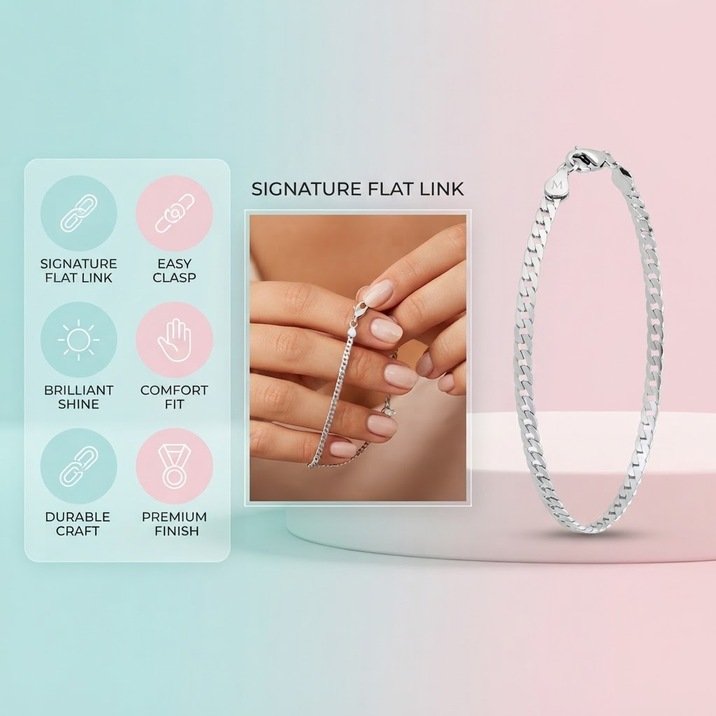
Serpentine Chain Bracelet
The Serpentine Chain Bracelet gets its character from movement rather than charms, gemstones, or oversized links. Its closely arranged flat, braided links form a smooth ribbon-like line around the wrist, giving the bracelet a more fluid appearance than a conventional round cable or open-link chain.
The current collection includes 10k yellow gold, 14k yellow gold, 14k white gold, and sterling silver versions. The main 10k yellow-gold version measures approximately 2 mm wide and comes in fixed lengths of 6, 6.5, 7, and 7.5 inches. It does not use an extender, so choosing the correct length is an important part of the fit.
About Serpentine Chain Bracelet
A serpentine chain is visually different from a bracelet made with clearly separated circular or oval links. The individual components sit tightly together, creating a flatter, more continuous surface.
That construction is what gives this bracelet its smooth, almost fabric-like appearance. Rather than seeing large gaps between links, the eye reads the bracelet as one flowing strip of metal.
For shoppers comparing several jewelry structures, the broader Jewellery collection includes chains, station bracelets, gemstone pieces, necklaces, rings, and other designs with noticeably different proportions.
Serpentine Chain Bracelet Features
- Jewelry type: Chain bracelet
- Chain design: Flat, closely braided serpentine links
- Current materials: 10k yellow gold, 14k yellow gold, 14k white gold, and sterling silver
- 10k gold width: Approximately 2 mm
- 14k white-gold width: Approximately 2 mm
- 10k length choices: 6, 6.5, 7, and 7.5 inches
- Fit format: Fixed-length bracelet rather than an adjustable extender design
- 10k recycled-gold claim: 90% recycled gold
- 14k white-gold finish: Rhodium plated
- Overall profile: Flat, flexible and close to the wrist
- Manufacturer positioning: Water resistant and hypoallergenic
Flat Braided Links Create The Serpentine Effect
The construction is the most important part of this bracelet.
Instead of presenting each link as a separate decorative shape, the links overlap closely enough to create a unified surface. As the wrist moves, the chain bends along its length while retaining its relatively flat profile.
That combination can produce more reflected light than an extremely fine open chain because there is a broader continuous metal surface facing outward.
It also gives the bracelet a very different identity from the Anklets Payal Foot Bracelet, where adjustable chainwork, decorative elements and a longer ankle-oriented proportion create considerably more movement and detail.
With the Serpentine design, the chain itself is the decoration.
A 2 mm Width Keeps The Look Controlled
The main 10k yellow-gold version has a chain width of approximately 2 mm.
That dimension gives the bracelet enough width for its braided structure to be visible without moving into the territory of a heavy curb chain or broad cuff.
Width is particularly important for a bracelet with closely connected links. A 2 mm open chain and a 2 mm flat serpentine chain can appear quite different because the serpentine construction presents more continuous metal to the eye.
This makes the bracelet suitable as a standalone piece even though its numerical width remains fairly restrained.
The site’s Topaz Ring in Sterling Silver provides a useful material contrast for shoppers considering silver-toned jewelry elsewhere in a coordinated set. Rather than matching jewelry by design, repeating a metal tone can be enough to connect several otherwise different pieces.
Fixed Length Means Fit Matters More
The bracelet does not use an adjustable extender in the current main configuration. Mejuri specifically lists it as fixed length and recommends selecting a larger size when a looser fit is preferred.
Available 10k yellow-gold lengths are:
6 inches, 6.5 inches, 7 inches, and 7.5 inches.
A closer fit emphasizes the smooth, continuous character of the serpentine chain because it follows the wrist more closely. A slightly longer choice allows the bracelet to move and drape more freely.
Neither fit is automatically better. The right option depends on wrist circumference and how much movement the wearer prefers.
Because there is no extender to compensate for a poor initial choice, checking wrist measurements before selecting a length is particularly worthwhile.
10k Yellow Gold Construction
The 10k yellow-gold version uses solid karat gold rather than a gold-colored coating over a different base metal. The manufacturer currently states that this variation is made using 90% recycled 10k gold.
Karat describes the proportion of gold in an alloy. The Federal Trade Commission’s gold jewelry guidance explains the terminology used for karat gold and why it should be distinguished from gold plating or other surface treatments.
This distinction matters particularly when comparing a bracelet intended to look visually simple. Two chains may both appear yellow-gold in photographs while having very different underlying material construction.
The 10k version also offers a different alloy composition from 14k gold, even though both belong to the solid-gold family.
14k Yellow Gold Offers Another Solid-Gold Option
Current bracelet collections also list the Serpentine Chain Bracelet in 14k yellow gold.
The visual design remains based around the same flat, braided serpentine structure, but the metal specification changes from 10k to 14k.
Gold fineness should be considered as an actual material characteristic rather than simply a pricing label. FTC precious-metal standards provide the regulatory framework for claims involving gold, silver and related jewelry terminology.
For a buyer, this means the exact material option should be confirmed rather than assuming every Serpentine Chain Bracelet has identical gold content.
The White-Gold Version Uses Rhodium Plating
The current 14k white-gold version is also approximately 2 mm wide and is offered in fixed bracelet lengths. The manufacturer states that its white-gold pieces receive a rhodium-plated finish, creating the bright white-metal appearance and added surface shine.
This is an important construction detail because white gold and rhodium are not the same material.
The underlying bracelet is 14k white gold, while rhodium forms the outer finishing layer. Over time, surface finishes can change through friction and wear, so white-gold jewelry may eventually require professional refinishing depending on its condition and how frequently it is worn.
That makes the white-gold variation visually suitable for a cooler jewelry wardrobe while giving it a different maintenance profile from an unplated yellow-gold version.
Sterling Silver Changes The Price And Metal Direction
The Serpentine Chain Bracelet is also currently offered in sterling silver.
Sterling silver produces a cooler appearance than yellow gold while preserving the characteristic flat braided structure.
The FTC’s silver jewelry information explains that sterling silver contains 92.5% pure silver and can be marked with terms such as sterling or 925.
This variation makes material choice a meaningful part of the purchase decision. Someone might prefer yellow gold for warmth, white gold for a fine-jewelry white-metal finish, or sterling silver for the distinctive brightness of silver.
The shape can remain familiar while the material changes the overall effect.
Comparing A Serpentine Chain With A Station Bracelet
A useful way to understand this bracelet is to compare it with a station-style design.
The current Jewellery selection also includes the Classic Cable Heart Station Bracelet. A station bracelet creates rhythm by interrupting a chain with decorative elements positioned at intervals.
The Serpentine Chain Bracelet does the opposite. Its design is visually continuous.
There are no central hearts, suspended charms or gemstone stations breaking the chain surface. Instead, the repeated braided links create their own texture.
For someone deciding between the two directions, the question is whether the bracelet should display distinct motifs or one uninterrupted metal line.
Why This Chain Works Well Alone
Some fine chains look incomplete without a charm or pendant-style centerpiece. The Serpentine construction does not have that problem because the link pattern provides enough texture on its own.
Its flat surface creates a clear line across the wrist, and movement changes how different sections catch light.
This gives it a relatively clean styling role. It can accompany a simple shirt, knit, dress or sleeveless outfit without needing another piece to explain the design.
A restrained chain bracelet can also be useful when earrings, necklaces or rings are already more decorative. Instead of adding another focal point, the bracelet contributes polished metal and texture.
Building A Bracelet Stack Around It
The Serpentine Chain can also function as the smooth component of a bracelet stack.
Because its surface is flat and its links are closely arranged, it creates good textural contrast beside a bracelet with round links, beads, stations or a more rigid profile.
The site’s Anklets Payal Foot Bracelet demonstrates how open chainwork and hanging details produce a completely different visual rhythm, even though it is proportioned for the ankle rather than wrist. That contrast can be useful when thinking about how different chain textures behave together.
A balanced wrist stack does not need every bracelet to have the same link pattern. Repeating a metal tone while varying structure can keep individual pieces easy to distinguish.
For additional metal and accessory combinations, the wider Jewellery category provides the most natural internal route.
Recycled Gold Claims Should Be Read Precisely
The current 10k yellow-gold listing states that its gold is made using 90% recycled gold.
A recycled-content claim refers to sourcing of the metal input. It does not create a separate gold purity category, nor should it automatically be expanded into broader environmental claims without supporting evidence.
The Responsible Jewellery Council’s Chain of Custody standard provides an industry framework for tracing eligible gold, silver and platinum-group metals through jewelry supply chains.
The London Bullion Market Association also maintains a responsible sourcing programme covering due-diligence expectations for precious-metal supply chains.
These frameworks help explain what responsible sourcing and traceability can involve while remaining separate from the manufacturer’s specific recycled-content statement for this bracelet.
Caring For A Flat Serpentine Chain
A tightly connected bracelet should be handled differently from a rigid bangle.
Avoid sharply folding or twisting the chain against its natural direction. Although the design is flexible enough to follow the wrist, forcing a flat chain into a tight kink can place unnecessary stress on its closely arranged links.
Surface care also depends on the selected metal.
For gold, a soft cloth and mild cleaning approach are usually preferable to abrasive polishing. Sterling silver can naturally develop tarnish through environmental exposure. The Canadian Conservation Institute’s silver care guidance explains why tarnish develops and recommends preventive handling and appropriate cleaning rather than excessive polishing.
The same institution’s broader metal storage guidance highlights the value of reducing physical contact, contaminants and unsuitable storage environments for metal objects.
For the rhodium-finished white-gold version, particularly aggressive polishing should also be avoided because the outer finish is part of the bracelet’s appearance.
Storage Is Especially Important For Flat Chains
One of the advantages of a serpentine bracelet is its fluid surface, but that surface also means the chain should be stored without sharp bends.
Lay the bracelet flat or allow it to follow a gentle natural curve inside a lined compartment.
Do not fold it tightly into a small space, and avoid placing heavy rings or bracelets directly on top of it. Keeping separate jewelry pieces apart also reduces rubbing between polished surfaces.
This differs from rigid jewelry that can hold its shape almost regardless of storage position.
A flat chain benefits from room to remain flat.
Choosing The Right Serpentine Chain Bracelet
The first choice is material. Current versions include 10k yellow gold, 14k yellow gold, 14k white gold and sterling silver. The second is length, because this is a fixed-length bracelet rather than a design that can simply be shortened or extended after fastening.
The third consideration is styling.
Someone wanting charms, gemstones or recognizable motifs may prefer a more decorative bracelet. Someone who wants the chain construction itself to provide the visual interest is more likely to appreciate the Serpentine design.
Its strength lies in that simplicity: approximately 2 mm of closely braided metal forming a smooth, flexible line around the wrist, with enough surface texture to remain noticeable without relying on additional decoration.
For comparisons across different metals and jewelry structures, the Jewellery collection and related pieces such as the Anklets Payal Foot Bracelet provide useful internal reference points for understanding how chain width, adjustability, texture and decorative details can change the character of a piece.
:::




Reviews
There are no reviews yet.