Color + Clenditioner
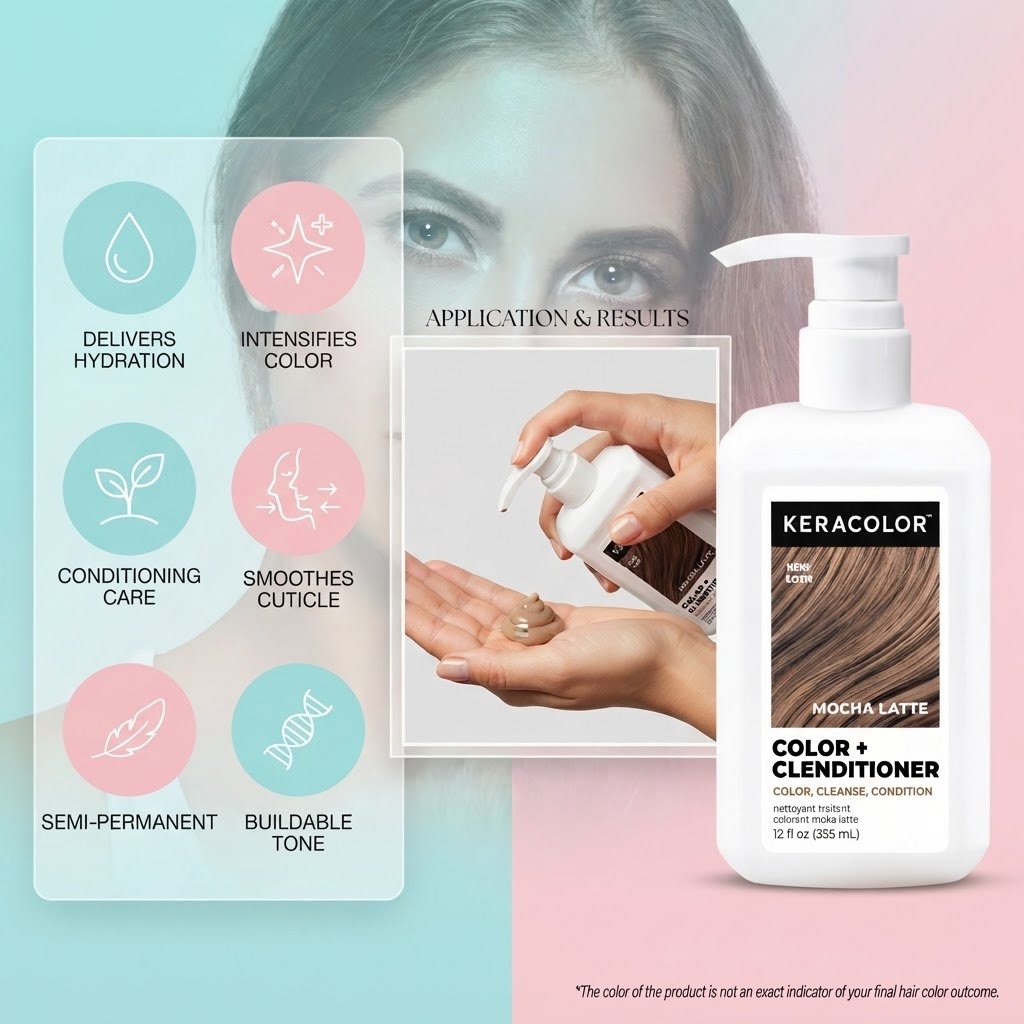
Keracolor Color + Clenditioner is a semi-permanent color-depositing cleansing conditioner designed to refresh, tone, or visibly change hair color while conditioning the strands in the same step. Unlike permanent oxidative color, it uses direct-dye pigments and does not require developer or activator. Keracolor currently offers the collection in 21 color options, with a standard 12 oz size and 33.8 oz sizes available for selected shades.
The formula combines conditioning ingredients such as cetyl alcohol, behentrimonium chloride, glycerin, hydrolyzed keratin, coconut oil, shea butter, rosehip oil, jojoba oil, and sweet almond oil with shade-specific direct dyes. Cocamidopropyl betaine and cocamidopropyl hydroxysultaine give the product some cleansing ability, but the experience is much closer to a rich, low-lather cleansing conditioner than a conventional foaming shampoo.
For Erothots shoppers maintaining color-treated hair, it fits naturally within the Hair Care collection and Shampoo & Conditioner range. Someone who wants color protection without depositing a new shade can also compare it with Elvive Color Vibrancy Protecting.
About Color + Clenditioner
Color + Clenditioner combines three cosmetic functions that are usually separated into different bottles: gentle cleansing, conditioning, and direct color deposition. Keracolor describes the product as an instant semi-permanent color system intended for refreshing existing hair color, toning unwanted warmth, adding fashion shades, or creating a temporary color change without oxidative developer.
The word “semi-permanent” is important. Keracolor states that the direct-dye pigments gradually fade as the hair is washed, but the rate of fading varies significantly with the starting shade, hair condition, porosity, chosen pigment, and number of applications. Lighter shades such as Light Pink and Rose Gold generally fade more readily, while Keracolor says blues, purples, teal, Espresso, and Onyx tend to remain more stubbornly.
This makes Color + Clenditioner useful for maintaining color between appointments, but it is not the same as permanent gray coverage or a permanent salon color service.
Color + Clenditioner Features
- Brand: Keracolor
- Product type: Semi-permanent color-depositing cleansing conditioner
- Standard size: 12 oz
- Larger size: 33.8 oz in selected shades
- Current collection: 21 color products
- Color technology: Direct-dye pigments
- Developer or activator: Not required
- Processing window: 3–20 minutes according to Keracolor’s current directions
- Application: Wet or dry hair, with dry application producing stronger color according to the brand
- Primary conditioning ingredients: Cetyl alcohol, behentrimonium chloride, glycerin, hydrolyzed keratin, coconut oil, shea butter, rosehip oil, jojoba oil, and sweet almond oil
- Cleansing ingredients: Cocamidopropyl betaine and cocamidopropyl hydroxysultaine
- Silicones: Yes, PEG-12 Dimethicone is present
- Fragrance: Yes
- Sulfates: Keracolor identifies Color + Clenditioner as sulfate-free
- Parabens: Keracolor identifies it as paraben-free
- Cruelty-free: Keracolor currently describes the collection as cruelty-free
- Gray coverage: Not intended for dependable full gray coverage
- Color result: Strongly dependent on starting color and hair porosity
- Pastel shades: Perform best on very light or pre-lightened hair
The exact direct dyes vary by shade, so the pigment section of one Color + Clenditioner should not be copied onto every other color.
Direct Dye Changes Tone Without Lightening The Natural Base
Color + Clenditioner works differently from permanent oxidative hair color.
Permanent color commonly uses an oxidative process to alter color deeper within the hair fiber and can be formulated to lighten natural pigment. Color + Clenditioner instead deposits preformed direct dyes, so there is no separate peroxide developer to mix into the product. Keracolor confirms that no activator or developer is needed.
That difference explains an important limitation: a bright blue conditioner cannot turn very dark natural hair into vivid pale blue because the underlying dark pigment remains present.
On a very light blonde base, the deposited color has a pale canvas and can appear much brighter. On medium or dark hair, the same pigment may create only a tonal shift or a jewel-like reflection in strong light. Keracolor specifically notes that darker color-treated hair tends to show more of a jewel-tone effect with its brighter shades.
Color deposition and lightening are therefore two separate processes.
Starting Hair Color Has A Major Effect On The Result
Keracolor divides its shade guidance according to starting hair level.
For very dark levels, the brand says pre-lightening is generally needed if the goal is a clearly visible new fashion color. Around levels 6 and 7, many stronger shades can become visible, although they may appear deeper or more muted than they do on pale blonde hair. Levels 9 and 10 provide the best canvas for pastel shades.
Keracolor specifically recommends a level 9 or lighter base for its pastel family if the goal is for those shades to appear close to their intended tone.
This matters when shopping online because a swatch represents the pigment, not a guarantee of the finished result on every starting color.
Someone with dark brown hair choosing Light Pink should expect a very different result from someone applying the same bottle to pre-lightened platinum hair.
Porosity Can Make Color Stronger And Harder To Remove
Hair porosity also changes the outcome.
Keracolor states that heavily processed or damaged hair can retain direct pigment considerably longer than less porous hair. That means two people beginning with an apparently similar blonde level can still experience very different color saturation and fading.
Porous areas can also take color more strongly than healthier sections.
For example, lightened ends may absorb more pigment than darker or less-processed roots. The result can be intentional dimension, but it can also produce uneven saturation when the underlying hair has an inconsistent processing history.
This is one reason Keracolor and Ulta recommend a strand test before full application.
A strand test provides more useful information than guessing from a color chart because it reveals how the actual hair responds to the exact shade.
Pastels Need A Much Lighter Canvas
Light Pink, Rose Gold, Platinum, Silver, and similar soft shades contain less visual pigment intensity than saturated reds, blues, or deeper browns.
Keracolor specifically says Light Pink works best on very light blonde or pre-lightened hair, while pastel results generally perform best on level 9 or lighter bases.
This is basic color visibility rather than a weakness in the conditioner.
A pale blush pigment cannot visually overpower a dark brown base. The underlying shade will always influence what is seen.
Someone wanting a stronger pink effect on medium blonde hair may therefore find Hot Pink more visible than Light Pink. Keracolor makes this same recommendation in its current FAQ.
Platinum, Silver And Silver Blue Have Different Toning Jobs
Not every cool shade in Color + Clenditioner is intended to do the same thing.
Keracolor currently recommends Platinum for lighter blonde hair with unwanted yellow or golden tones, Silver for medium-to-light blonde hair showing warmer orange or brassy tones, and Silver Blue for darker blonde through light brown hair where orange warmth needs to be visually countered.
This is based on complementary color relationships.
Cool violet and blue pigments visually counter warm yellow and orange tones, but the starting shade still determines the finished color.
Keracolor also cautions that Silver can create a greenish appearance when significant yellow remains in the hair.
For someone who only wants brass control rather than a complete 3-in-1 color cleanser, Erothots’ Shampoo & Conditioner collection currently includes a dedicated Purple Toning Shampoo, giving a more conventional toning-shampoo alternative.
Brown And Dark Shades Are Better For Refreshing Than Permanent Gray Coverage
The darker Color + Clenditioner shades include options such as Mocha, Espresso, Onyx, Merlot, Cinnamon, and other natural-looking tones within the current collection.
Keracolor describes Mocha as the cooler or more neutral brown option, while Espresso is deeper, warmer, richer, and generally longer lasting.
These shades are useful for refreshing previously colored brunette hair.
They should not be sold as dependable permanent gray coverage.
Keracolor explicitly says its direct-dye formula is not recommended for full gray coverage. Some gray strands may pick up pigment and become blended, while resistant gray hair may show little change.
That distinction prevents Color + Clenditioner from being confused with permanent root-color products designed specifically to cover resistant gray.
The Conditioner Base Does Much More Than Carry Pigment
Color is only one part of the formula.
Cetyl alcohol appears immediately after water in current shade formulas. This is a fatty alcohol used to give conditioners body, softness, and slip. It should not be confused with volatile drying alcohols simply because both contain the word alcohol.
Behentrimonium chloride is another major ingredient. It is a cationic conditioner that helps reduce friction and makes wet hair easier to detangle. Stearamidopropyl dimethylamine provides additional conditioning support.
These ingredients explain why Color + Clenditioner feels considerably richer than a typical color-depositing shampoo.
They also make sense for color-treated hair, which may already have undergone bleaching, permanent coloring, or other processing.
The American Academy of Dermatology recommends conditioner as part of gentle hair care because conditioning improves manageability and reduces friction during detangling.
Glycerin Helps The Formula Hold Onto Water
Glycerin appears very high in the current Color + Clenditioner formula.
It is a humectant, meaning it interacts with water within cosmetic formulations.
Its role complements the richer lipids and conditioning agents rather than replacing them. Glycerin contributes to the hydrated feel, while fatty alcohols, oils, shea butter, and conditioning ingredients influence softness and lubrication.
That combination is more relevant to the product’s feel than simply saying it “moisturizes” without explaining the formulation.
For hair that needs hydration but no added pigment, Erothots’ Hair Care collection contains conventional conditioners and moisturizing shampoos that do not intentionally alter tone.
Hydrolyzed Keratin Is A Hair-Shaft Conditioning Ingredient
Keracolor prominently highlights hydrolyzed keratin.
Hair fibers themselves contain keratin proteins, but applying hydrolyzed keratin does not cause a damaged strand to biologically regenerate.
In hair cosmetics, hydrolyzed proteins can deposit onto or interact with the hair surface, improving feel and helping create a smoother cosmetic finish.
Keracolor describes the ingredient around strength, shine, and softness.
The most accurate description is therefore that hydrolyzed keratin contributes to the conditioning and strengthening feel of the formula, not that it permanently repairs every form of structural damage.
Coconut Oil, Shea Butter And Plant Oils Add A Richer Conditioning Layer
The formula also contains coconut oil, shea butter, rosehip seed oil, jojoba seed oil, sweet almond oil, and grapefruit extract.
Coconut oil and shea butter provide emollient lipids. Jojoba, rosehip, and almond oils add additional conditioning material within the rinse-off system.
These ingredients appear after the main conditioning and preservative system, so Color + Clenditioner should not be described as primarily an oil treatment.
Its performance comes from the complete base: fatty alcohols, cationic conditioners, surfactants, glycerin, silicone, proteins, plant oils, and pigments all working together.
That makes it more technically accurate to call it a color-depositing cleansing conditioner rather than an oil mask with dye added.
It Contains Silicone
Color + Clenditioner is not silicone-free.
Current shade formulas contain PEG-12 Dimethicone.
This water-dispersible silicone derivative can contribute to slip and smoother hair feel.
Its presence is worth stating because sulfate-free and silicone-free are sometimes incorrectly treated as a pair. Keracolor identifies the product as sulfate-free, but that does not mean every silicone has been excluded.
Anyone specifically following a silicone-free hair routine should therefore check the current ingredient label rather than relying only on the sulfate-free claim.
The Product Is Fragranced
Current formulas list Fragrance/Parfum, with limonene and linalool also declared.
Color + Clenditioner should therefore not be described as fragrance-free.
For most shoppers this is simply part of the sensory experience. Someone with a known fragrance allergy or highly reactive scalp should pay closer attention.
The FDA’s cosmetic-allergen information explains that fragrance ingredients can trigger reactions in susceptible users.
Every Shade Uses A Different Pigment Combination
Most of the conditioner base remains similar across colors, but the final dye blend changes.
For example, the current Rose Gold formula includes Basic Blue 99, Basic Orange 31, and Basic Violet 2.
The current Red formula uses Basic Red 51, Basic Orange 31, and Basic Brown 16.
Merlot uses another blend containing Basic Orange 31, Basic Blue 99, Basic Brown 16, and Basic Red 51.
Purple has its own combination including Basic Violet 2, HC Blue 15, and Basic Yellow 57.
This is why the exact ingredient panel for the chosen shade is more important than one generic Color + Clenditioner INCI list.
Getting An Even Color Deposit
Keracolor’s current instructions allow application to wet or dry hair for 3–20 minutes, with dry hair recommended when a stronger color result is wanted. The brand advises thoroughly saturating the hair and distributing the product evenly from roots to ends.
A wide-tooth comb can help distribute the product through longer hair according to Keracolor’s application guide.
The amount needed depends on hair length and density. The important part is even coverage rather than applying a thin layer that leaves sections untreated.
Because direct color can stain skin and fabrics, Keracolor acknowledges that some temporary staining can occur even though the formula is designed to minimize it. The brand advises washing skin with soap or non-pigmented shampoo if staining appears and notes that incompletely rinsed pigment can transfer to fabric.
More Applications Can Build A Stronger Result
Keracolor describes the color as buildable.
Each use can deposit additional pigment, so someone starting with untreated hair may need consecutive applications before reaching the intended saturation. Once the desired tone is established, the brand commonly suggests refreshing color approximately once or twice per week.
This also means over-depositing is possible.
Someone using a toning shade on very porous blonde hair may reach the desired neutralization faster than someone with resistant virgin hair.
A fixed schedule therefore makes less sense than monitoring the actual color.
Color Fades Gradually Rather Than On An Exact Calendar
Keracolor does not promise one exact number of washes for every shade and hair type.
Its current FAQ says longevity depends on the condition and porosity of the hair and the intensity of the shade.
That is more realistic than saying every Color + Clenditioner lasts exactly ten washes.
Highly porous lightened hair may hold strong direct dyes for considerably longer, while a pale pastel on relatively resistant hair may fade quickly.
Traditional shampooing also gradually removes deposited color, according to Keracolor.
Someone trying to maintain a salon shade rather than change it can pair color-depositing care with a more traditional color-care product such as Erothots’ Elvive Color Vibrancy Protecting, depending on whether the priority is adding pigment or simply reducing visible fading.
Removing A Strong Direct Dye Can Take Time
Semi-permanent does not mean instantly removable.
Keracolor states that stubborn colors may require a clarifying shampoo or dedicated direct-dye remover, particularly when pigment has accumulated in porous hair. The company specifically identifies blues, purples, teals, Onyx, and Espresso among shades that tend to remain longer.
Ulta also cautions against improvising with ammonia or peroxide to remove direct dyes and recommends professional help for drastic color changes.
That matters when choosing a vivid shade.
The lower commitment compared with permanent color does not mean there is zero commitment, especially on heavily lightened hair.
It Is Not Designed For Eyebrows Or Eyelashes
Color + Clenditioner is a hair-color product for scalp hair.
Keracolor explicitly advises against applying it to eyebrows, and Ulta’s safety information states that it must not be used to dye eyelashes or eyebrows.
The FDA gives the same general safety advice for hair dyes: keep them away from the eyes and do not use scalp-hair dyes on eyebrows or eyelashes.
This warning should not be treated as optional simply because Color + Clenditioner is marketed as a conditioning direct dye rather than a permanent box color.
Patch And Strand Testing Matter
Ulta’s current product precautions recommend both a preliminary patch test and strand test before use.
The strand test helps predict color.
The skin test addresses a different issue: tolerance.
The FDA recommends following label instructions and performing the specified skin test before hair coloring because reactions can occur even when a person has colored their hair previously without trouble.
This is especially useful with a fragranced formula containing multiple conditioning ingredients and shade-specific dyes.
Color + Clenditioner Versus Traditional Shampoo And Conditioner
A conventional shampoo separates cleansing from conditioning.
Color + Clenditioner combines both into one lower-lather formula while also depositing pigment.
That convenience is one of its main advantages for color maintenance, but it may not replace every shampoo permanently.
Someone using heavy styling products, oils, dry shampoo, or mineral-rich water may occasionally want a different cleanser depending on buildup and scalp needs.
Likewise, someone with very dry or highly processed lengths may still prefer additional conditioning after some washes.
Erothots’ Shampoo & Conditioner collection provides those traditional wash-day alternatives alongside moisturizing, volumizing, and color-care formulas.
Color + Clenditioner Versus Purple Toning Shampoo
A purple shampoo normally has one narrowly defined job: depositing violet pigment to counter yellow warmth in blonde or gray hair.
Color + Clenditioner is broader.
Its current collection includes natural browns, reds, coppers, bright fashion colors, pastel tones, and several corrective cool shades. Keracolor’s current collection page shows 21 products.
Someone who only needs blonde toning may prefer the simplicity of a dedicated purple shampoo.
Someone who wants to maintain copper, deepen brown, add Merlot, create Rose Gold, or move into Blue, Teal, or Hot Pink is closer to the purpose of Color + Clenditioner.
Color + Clenditioner Versus Permanent Hair Color
Permanent color is the better comparison when someone needs substantial lightening, permanent gray coverage, or a long-lasting change to natural pigment.
Color + Clenditioner is better suited to depositing tone onto the color that already exists.
There is no developer to mix, and Keracolor’s semi-permanent pigments fade progressively.
That makes the product particularly useful between full color services.
It can refresh a fading copper, cool an increasingly brassy blonde, deepen a brunette, or keep a vivid salon shade looking stronger without carrying out another complete oxidative color process every time the tone begins to fade.
Who Is Color + Clenditioner Best Suited To?
The strongest match is color-treated or pre-lightened hair that needs regular pigment refreshment without another permanent-color session.
It can also work on virgin hair, but Keracolor notes that untreated hair may require longer processing or repeated applications and that visible results still depend heavily on starting level.
Pastel users benefit most from a very light base.
Brunettes can use deeper shades for tonal enhancement.
Blondes can choose Platinum, Silver, or Silver Blue according to the warmth they want to counter.
Anyone expecting predictable permanent gray coverage, major lightening, or an identical result regardless of starting shade is looking for a different type of hair-color technology.
Current Formula Structure
A representative current formula, such as Rose Gold, reads:
Water/Aqua/Eau, Cetyl Alcohol, Glycerin, Behentrimonium Chloride, Cocamidopropyl Betaine, Stearamidopropyl Dimethylamine, Sorbitan Laurate, Cocamidopropyl Hydroxysultaine, Phenoxyethanol, Caprylyl Glycol, PEG-12 Dimethicone, Fragrance (Parfum), Hydrolyzed Keratin, Cocos Nucifera Oil, Butyrospermum Parkii Butter, Rosa Moschata Seed Oil, Simmondsia Chinensis Seed Oil, Prunus Amygdalus Dulcis Oil, Citrus Grandis Fruit Extract, Citric Acid, Tocopheryl Acetate, Tetrasodium EDTA, Limonene, Linalool, followed by its shade-specific direct dyes.
Other shades use essentially the same conditioning architecture but different colorants. Because formulas can be updated and pigment systems differ by color, the bottle for the exact shade being purchased should remain the final ingredient reference.
What Makes Color + Clenditioner Different
Keracolor Color + Clenditioner stands out because the color is integrated into a genuine conditioning cleanser rather than a basic pigment carrier.
Cetyl alcohol, behentrimonium chloride, stearamidopropyl dimethylamine, glycerin, hydrolyzed keratin, coconut oil, shea butter, rosehip oil, jojoba oil, almond oil, and PEG-12 Dimethicone all contribute to the conditioning side of the product, while betaine-type surfactants provide mild cleansing and direct dyes create the visible tonal change.
The current 21-product collection also covers much more than vivid fashion color. It includes brunette refreshers, copper and red tones, pastel shades, blue and green families, and corrective cool tones for blonde hair.
Its limitations are equally important: the result depends strongly on starting color and porosity, it does not lighten hair, gray coverage is not guaranteed, stronger direct dyes can remain in porous hair for a considerable time, and every shade has its own pigment blend.
Final Note
Keracolor Color + Clenditioner is best understood as a semi-permanent 3-in-1 color-depositing cleanser and conditioner for maintaining, toning, or temporarily changing existing hair color. It requires no developer and uses direct pigments that gradually fade with washing.
Its conditioning base is substantial, combining fatty alcohols, cationic conditioners, glycerin, hydrolyzed keratin, coconut oil, shea butter, rosehip oil, jojoba oil, almond oil, and PEG-12 Dimethicone. That makes the formula particularly relevant to previously colored or pre-lightened hair that needs pigment without giving up softness and slip.
The most important purchasing decision is the starting hair color, not simply the shade printed on the bottle. Very light hair gives pastels and vivids the clearest canvas, deeper hair produces more subtle tonal results, and highly porous hair can hold pigment for longer than expected. Keracolor therefore recommends choosing by hair level, performing strand and skin testing, and allowing the finished result to guide how frequently the color is refreshed.
Within Erothots, shoppers can compare Color + Clenditioner with the wider Hair Care range, traditional Shampoo & Conditioner products, or Elvive Color Vibrancy Protecting when maintaining existing color without intentionally depositing a new shade is the priority.
:::



Reviews
There are no reviews yet.