

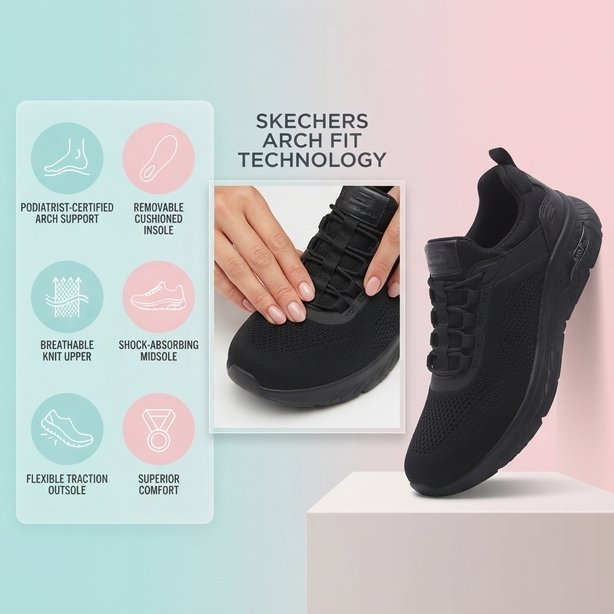
Men’s Crosser Arch Fit Slip Resistant Work Sneaker
The Men’s Crosser Arch Fit Slip Resistant Work Sneaker by Skechers Work is designed for jobs where long periods on your feet, changing floor conditions, and dependable underfoot support matter more than athletic styling alone. The Crosser combines an engineered knit and synthetic upper with fixed stretch laces, a removable Air-Cooled Arch Fit insole, a cushioned shock-absorbing midsole, and an SRO-rated slip-resistant outsole.
This specific Crosser corresponds to Skechers style 200440, also identified as Arch Fit Crosser – Rowynn. It is important to distinguish it from other Crosser models that include protective safety toes. Style 200440 is documented under ASTM F2892 electrical-hazard requirements and should not be described as a carbon-toe, steel-toe, or ASTM F2413 safety-toe shoe.
About Men’s Crosser Arch Fit Slip Resistant Work Sneaker
The Crosser is built as a soft-toe work sneaker rather than a conventional casual trainer. Its appearance is relatively understated, particularly in black, allowing it to fit naturally into workplaces where an athletic-looking shoe needs to remain professional and unobtrusive.
The upper combines engineered knit with synthetic components, while fixed stretch laces create the appearance and secure feel of a lace-up without requiring traditional laces to be tied repeatedly. Beneath the foot, Skechers uses its removable Arch Fit insole together with a well-cushioned midsole. The outsole receives an SRO slip-resistant rating for traction testing on wet, dry, oily, and greasy surfaces.
For broader fashion and footwear browsing, shoppers can move naturally into the Hotscope shop collection rather than mixing unrelated beauty or accessory links into a work-footwear page.
Men’s Crosser Arch Fit Slip Resistant Work Sneaker Features
- Brand: Skechers Work
- model: Arch Fit Crosser – Rowynn
- style number: 200440
- type: men’s soft-toe work sneaker
- upper: engineered knit and synthetic material
- closure: fixed stretch laces
- insole: removable Air-Cooled Skechers Arch Fit system
- midsole: shock-absorbing and well cushioned
- outsole: SRO-rated slip-resistant construction
- tested surfaces: wet, dry, oily, and greasy conditions
- electrical-hazard classification: ASTM F2892
- heel height: approximately 1.5 inches
- documented color: black
- documented widths: medium and extra wide on current Skechers listings
- documented sizes: men’s US 7–14 with selected half sizes
- safety toe: no protective safety-toe claim for style 200440
Arch Fit Support Underfoot
The Arch Fit system is one of the defining differences between the Crosser and a basic slip-resistant work shoe.
Skechers describes the system as a patented removable insole developed from approximately 20 years of data and 120,000 unweighted foot scans. The company also states that its shape was designed with podiatry input and that the removable insole is intended to conform more closely to the foot while helping distribute weight and absorb shock.
Those statements describe the manufacturer’s footwear technology rather than a medical treatment. Arch support preferences vary considerably between people, and someone with persistent foot pain or a diagnosed condition may need individualized professional guidance rather than relying entirely on a branded insole system.
The removable construction is useful for another reason: it allows the wearer to inspect the insole separately as it ages. However, workers who need a particular workplace certification should be careful about replacing original components. ASTM notes that modifying certified footwear with aftermarket inserts or other components can affect whether the original performance certification remains valid.
For readers who want to understand that standard rather than simply seeing an ASTM number in a product description, the ASTM F2892 soft-toe footwear specification explains the scope of electrical-hazard, slip-resistance, and other performance requirements covered by the standard.
Slip Resistant Outsole For Work Surfaces
Skechers identifies the Crosser outsole as SRO rated, with testing intended to address traction across wet, dry, oily, and greasy surfaces.
That is more specific than simply describing a rubber sole as “grippy.” Workplaces such as restaurants, hospitality environments, healthcare facilities, retail backrooms, commercial kitchens, and service areas may expose footwear to liquids or contaminants that change floor friction.
NIOSH research gives useful context for why dedicated slip-resistant footwear matters. In a large study involving food-service workers, highly rated slip-resistant footwear was associated with a substantial reduction in workers’ compensation claims resulting from slipping injuries. Readers interested in the research can review the NIOSH study on slip-resistant work shoes.
A slip-resistant rating should still not be interpreted as a promise that slipping is impossible. Surface material, contaminants, worn tread, walking speed, floor maintenance, and other workplace conditions all contribute to traction.
Why Workplace Housekeeping Still Matters
A slip-resistant shoe is only one part of workplace fall prevention.
OSHA notes that slip resistance can vary according to both the walking surface and the employee’s footwear. Its guidance also emphasizes eliminating or controlling slippery conditions rather than relying solely on what a worker is wearing.
That means spilled liquids, grease, loose materials, damaged floor surfaces, and other hazards still require proper workplace attention even when employees wear SRO-rated shoes.
The OSHA guidance on slippery walking surfaces provides useful regulatory context for employers and workers assessing footwear alongside housekeeping and floor conditions.
Tread Condition Matters Over Time
The Crosser may begin with a tested slip-resistant outsole, but tread performance does not stay unchanged forever.
NIOSH-funded research into worn footwear found that tread wear can reduce the ability of a sole to move fluids away from the contact area, which can decrease available friction on contaminated surfaces.
That makes outsole inspection particularly relevant on a work shoe. A pair that still looks acceptable from above may have significant wear beneath high-contact sections of the heel or forefoot.
The NIOSH research on worn shoe tread and slipping risk gives additional technical background on why work footwear should be assessed by outsole condition rather than age alone.
Electrical Hazard Rating Explained
The Crosser Rowynn is documented as ASTM F2892 Electrical Hazard rated footwear.
This specification requires careful wording because electrical-hazard footwear and protective safety-toe footwear are not automatically the same thing.
ASTM F2892 covers soft-toe footwear intended to meet designated performance requirements outside the protective toe area. The current ASTM specification includes electrical-hazard performance and also recognizes slip-resistance classifications.
By comparison, OSHA’s broader workplace foot-protection standard addresses circumstances in which employees may need protective footwear because of falling objects, rolling objects, objects capable of piercing the sole, or residual electrical hazards.
The practical conclusion is important: do not choose this specific Crosser solely because a workplace requires a protective safety toe. If an employer requires ASTM F2413 impact/compression toe protection, the worker should select footwear carrying the required certification rather than assuming that ASTM F2892 provides the same protection.
The OSHA workplace foot-protection standard provides a useful reference for understanding why job-specific requirements should be checked before purchasing work footwear.
Engineered Knit And Synthetic Upper
Unlike a traditional leather work shoe, the Crosser Rowynn uses an engineered knit and synthetic upper.
That construction gives it a more sneaker-like appearance and can reduce the visual and physical bulk associated with heavier work footwear. The predominantly black finish also helps keep the styling restrained enough for workplaces where dark footwear is preferred.
The engineered upper should not be confused with a waterproof construction. Skechers does not identify style 200440 as waterproof on its current product specification, so buyers working outdoors or around substantial water exposure should not assume the knit upper provides waterproof protection.
Workplace suitability should always be based on the hazards present rather than the appearance of the shoe.
Fixed Stretch Laces And Easy Entry
The Crosser uses fixed stretch laces instead of conventional tie laces. Skechers describes the construction as an engineered knit and synthetic upper with fixed stretch lacing.
This creates a useful middle ground between a full slip-on and a traditional lace-up work shoe. The stretch system keeps the upper looking like a sneaker while removing the need to retie loose laces throughout a shift.
A heel pull tab is also documented on retail information for style 200440, helping with entry.
Because the laces are fixed, correct overall sizing becomes more important. They provide stretch, but they do not offer the same range of manual tension adjustment available from conventional laces.
Shock Absorbing Cushioned Midsole
Skechers pairs the Arch Fit insole with a shock-absorbing, well-cushioned midsole.
That combination is particularly relevant to occupations involving repeated walking or prolonged standing on hard floors. The midsole forms the cushioning layer beneath the insole and above the work outsole, so comfort is not being provided by the removable Arch Fit component alone.
Cushioning still needs to be assessed alongside stability. An extremely soft shoe is not automatically the best work shoe, particularly if the wearer feels unstable or if the job involves frequent changes of direction.
The Crosser’s value comes from combining cushioning, structured arch support, work-rated traction, and a sneaker-like upper rather than maximizing any one feature in isolation.
Heel Height And Workday Movement
Skechers lists the Crosser Rowynn with an approximately 1.5-inch heel height.
That measurement reflects the sole construction rather than a separate dress-shoe heel. The midsole and outsole gradually create the underfoot height within the work-sneaker profile.
For buyers accustomed to very flat shoes, the Crosser may therefore feel more substantial underfoot. It is sensible to walk in the pair indoors and assess stability, heel security, forefoot flex, and overall comfort before wearing it for a full shift.
Sizing And Width Options
Current Skechers information shows men’s sizes 7 through 14, with selected half sizes through 11.5. The official listing also identifies medium and extra-wide options for the black Rowynn version, although inventory can change.
Width is especially important with a work shoe because long wear can make small fit problems much more noticeable.
A shoe that is too narrow may create concentrated pressure across the forefoot, while excessive internal space can allow unwanted movement. Fixed stretch laces can accommodate some variation across the upper, but they cannot correct a shoe whose basic length or width is wrong.
FootCareMD recommends measuring both feet, fitting to the larger foot, checking the widest part of the shoe against the widest part of the foot, and walking in prospective footwear before deciding that the fit is right. Its proper shoe-fit guidance offers useful background for evaluating work footwear beyond simply ordering the usual size.
Workwear Styling Without Looking Overly Athletic
The black Crosser has a useful advantage for jobs that allow sneakers but still expect relatively understated clothing.
Its monochrome work-sneaker shape can sit beneath black work trousers, charcoal uniforms, dark chinos, or khaki pants without creating the bright contrast of a heavily branded running shoe.
For casual or uniform-adjacent styling outside the workplace, Hotscope’s guide to khaki pants outfit combinations provides examples of how sneaker silhouettes work with straight, slim, and casual khaki trousers.
The practical styling rule is simple: when the shoe is being chosen primarily for work performance, keep the surrounding outfit uncomplicated and let the black upper blend into the uniform or trouser line.
Which Jobs May Suit The Crosser
The feature set makes the Crosser most relevant to workplaces where a soft-toe athletic-style shoe is permitted and slip resistance is useful.
Examples can include food service, hospitality, retail, selected healthcare and service environments, warehouse roles without protective-toe requirements, and other indoor jobs involving extended standing or walking.
That does not mean the Crosser automatically satisfies every employer’s footwear policy.
A workplace may separately require waterproofing, puncture resistance, metatarsal protection, a protective toe, chemical resistance, static-dissipative footwear, or other specifications. Employer requirements and hazard assessments should therefore take priority over a general product description.
What This Crosser Does Not Claim
The exact model matters because Skechers currently sells several products carrying the Crosser name.
Other Crosser variants include models with carbon nano protective toes and ASTM F2413 certification. Style 200440 Rowynn is different. Its official specification identifies slip resistance and ASTM F2892 electrical-hazard performance but does not identify a protective safety toe.
Keeping those models separate prevents an important safety specification from being accidentally transferred from one product to another.
Someone who needs impact-and-compression toe protection should verify the exact style number and certification printed on the footwear rather than relying on the shared “Crosser” family name.
Care And Work Shoe Maintenance
Work shoes deserve more frequent inspection than footwear worn only occasionally.
Remove surface dirt from the knit and synthetic upper with a soft brush or slightly damp cloth, paying particular attention to contaminants picked up during a shift. Avoid harsh solvents unless the manufacturer specifically approves them for the materials.
More importantly, inspect the outsole regularly. Grease, dirt, and lodged debris can interfere with tread performance, while progressive wear can reduce traction even when the upper remains in good condition.
Allow damp footwear to dry naturally between shifts rather than placing it against intense direct heat.
The insole can also be removed periodically for inspection and drying. If replacement becomes necessary and workplace certification matters, check whether changing the original insole could affect the shoe’s certified performance before installing an aftermarket component. ASTM explicitly warns that component modifications can affect certification.
What To Check Before Buying
The Crosser is strongest when its specifications match the actual job.
Confirm first that a soft-toe shoe is permitted. Next, check whether the workplace requires a particular slip-resistance, electrical-hazard, waterproof, puncture, or protective-toe standard.
Then consider fit. The fixed stretch-lace system makes entry convenient but offers less manual adjustment than ordinary laces. Choose the width that allows the foot to sit securely without side pressure or excessive movement.
Finally, assess the floor conditions involved in the job. SRO traction is a meaningful work feature, but no outsole eliminates the need for good housekeeping, suitable walking practices, and replacement once tread becomes excessively worn.
For Hotscope orders, the current return and refund policy for footwear states that eligible shoes should remain unworn and in their original box, making indoor fit testing especially important before a new pair is taken to work.
Men’s Crosser Arch Fit Slip Resistant Work Sneaker Summary
The Men’s Crosser Arch Fit Slip Resistant Work Sneaker combines an engineered knit and synthetic upper, fixed stretch laces, removable Air-Cooled Arch Fit insole, shock-absorbing cushioned midsole, approximately 1.5-inch heel, and SRO slip-resistant outsole in a straightforward black work-sneaker design.
Its strongest technical points are the slip-resistant outsole, Arch Fit support system, cushioned midsole, and ASTM F2892 electrical-hazard classification. Just as important is what this exact model does not include: style 200440 is not documented as a protective safety-toe shoe.
That distinction makes the Crosser a particularly relevant choice for jobs that permit soft-toe work sneakers and require dependable traction, but buyers should always match footwear certification to their employer’s specific workplace requirements rather than choosing on comfort features alone.


Reviews
There are no reviews yet.