Men’s Gel Heel Cup
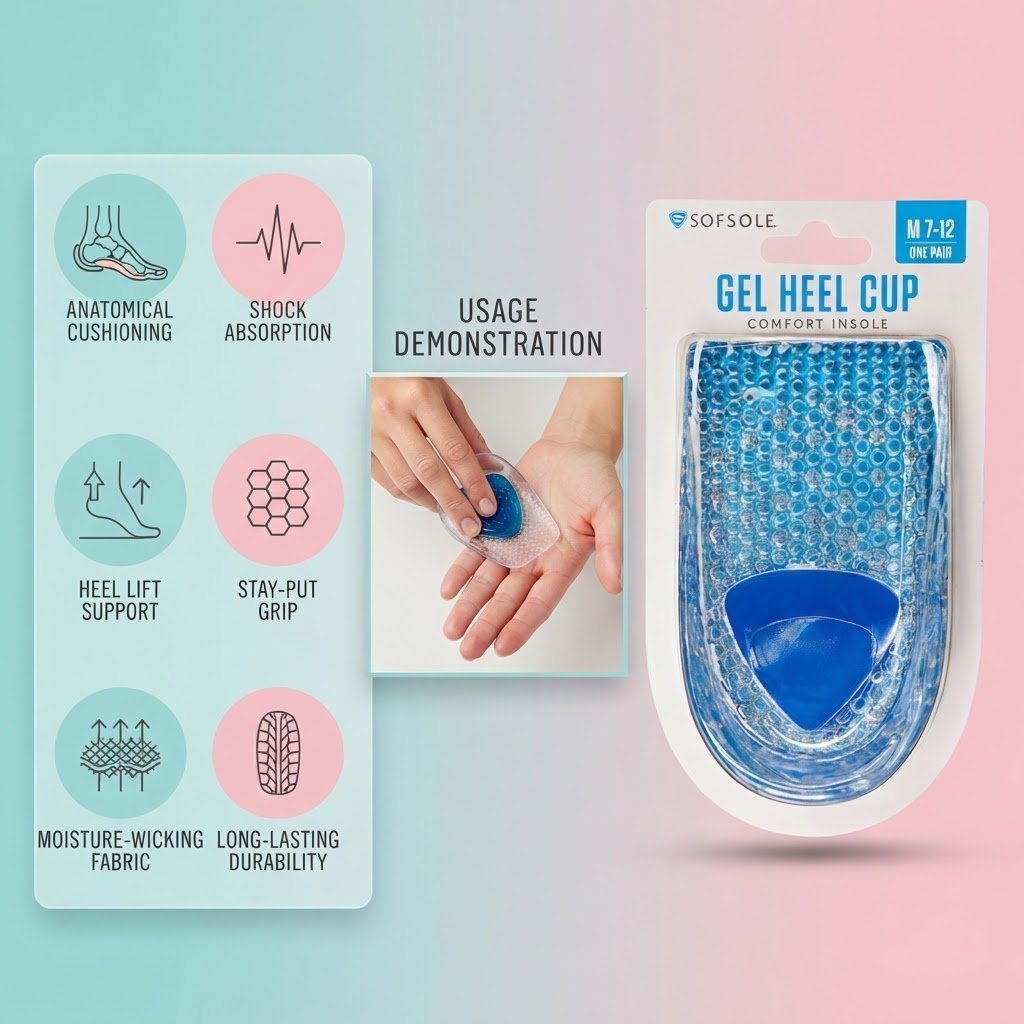
The Men’s Gel Heel Cup by Sof Sole is a compact shoe insert designed to add targeted cushioning beneath and around the heel without replacing the entire insole. Made from lightweight Sof Gel polymer, it uses a cupped shape and flexible edges to cradle the heel while taking up less space than a full-length insert. The current men’s version is designed for shoe sizes 7–12.
This is best understood as an over-the-counter cushioning accessory rather than a custom orthotic. It can make suitable footwear feel softer around the heel, but it should not be presented as a cure for persistent foot problems or as a replacement for professional assessment when heel pain continues.
About Men’s Gel Heel Cup
Sof Sole developed the Gel Heel Cup to concentrate cushioning in the rear section of a shoe. Instead of extending from heel to toe like a conventional insole, the insert sits inside the heel area and surrounds the lower part of the heel with flexible gel.
The manufacturer’s current specification highlights four core characteristics: flexible edges that help the cup fit inside different shoes, gel cushioning that cradles the heel, lightweight Sof Gel construction and an intended improvement in general shoe comfort and fit. Sof Sole also positions the cup for additional heel cushioning during higher-impact activity.
The men’s version currently covers US men’s shoe sizes 7–12, which is worth checking before assuming a one-size heel insert will suit every shoe.
For footwear that may accommodate a heel insert, the Hotscope Men’s Shoes collection is the most relevant internal category to connect with this accessory.
Men’s Gel Heel Cup Features
- Brand: Sof Sole
- Product: Gel Heel Cup Insole
- Product Type: Partial-length heel cushioning insert
- Material: Lightweight Sof Gel polymer
- Cushioning Area: Heel
- Construction: Cupped gel shape with flexible edges
- Men’s Size Range: US men’s 7–12
- Fit Position: Rear section of the shoe
- Purpose: Additional cushioning and comfort around the heel
- Suitable Shoe Types: Depends on available heel space and shoe construction
- Full-Length Insole: No
- Custom Orthotic: No
The manufacturer describes this model primarily around comfort and cushioning, which is more accurate than turning it into a medical-treatment product.
Sof Gel Cushioning Around The Heel
The insert uses Sof Sole’s lightweight polymer gel rather than conventional foam.
Gel has a different feel from a soft foam insole because the material sits directly beneath the heel in a compact cup. The surrounding shape helps keep the cushioning concentrated around the part of the foot that first contacts the ground during normal walking.
Sof Sole specifically says its gel cushioning is designed to cradle the heel and improve comfort.
That makes the product useful for someone whose existing shoes generally fit well but feel firmer than preferred beneath the heel.
It does not automatically make an unsuitable shoe comfortable. A shoe that is too small, too narrow, badly worn or inappropriate for the activity should be addressed separately.
Flexible Edges Help With Shoe Fit
A heel cup has to sit inside an existing shoe, so its outer shape matters.
Sof Sole uses flexible edges intended to help the insert settle into different footwear shapes rather than creating a hard ridge around the heel.
Even so, “fits any shoe” should be interpreted practically rather than literally. Shoes vary significantly in heel depth, lining thickness, internal width and removable-insole construction.
A roomy walking shoe or boot may accommodate a heel cup more easily than a very shallow dress shoe.
The American Podiatric Medical Association’s guidance on shoe inserts recommends bringing or testing inserts with the footwear in which they will actually be used. APMA notes that an insert should match the contours and available space of the shoe rather than being chosen independently of the footwear.
Men’s Sizes 7 To 12
The current Sof Sole men’s Gel Heel Cup is specified for US men’s shoe sizes 7–12.
Unlike a full-length insole, the cup does not need to match the complete outline of the shoe from heel to toe. Its main job is to sit correctly beneath and around the heel.
Size still matters because the heel needs to remain centered within the cup rather than sitting on one of its edges.
After placing the insert into the shoe, check whether the heel rests naturally in the center while standing. If the cup folds, shifts significantly or feels like a hard edge is pressing into the foot, the insert and shoe may not be a good combination.
Heel Cup Versus Full Length Insole
A heel cup and full-length insole solve different footwear-comfort problems.
A full insole runs through most or all of the shoe and may provide cushioning beneath the heel, arch and forefoot. A heel cup concentrates its material almost entirely around the rear foot.
This means the Gel Heel Cup takes up less overall shoe volume and leaves most of the existing footbed unchanged.
That can be helpful when the wearer likes the original shoe fit through the forefoot and arch but wants additional cushioning beneath the heel.
APMA distinguishes heel liners and heel cups from other inserts such as full insoles and arch supports. It describes heel cups as products intended to provide extra cushioning specifically in the heel region.
This Is An Insert, Not A Custom Orthotic
Marketing terminology around insoles can become confusing, so this distinction is important.
The Sof Sole Men’s Gel Heel Cup is an over-the-counter shoe insert. It is not individually molded or prescribed for a person’s foot.
APMA explains that a product is not a custom orthotic unless it has been prescribed and created specifically for the individual. Over-the-counter inserts can provide cushioning, comfort or support, but they should not be represented as correcting complex biomechanical problems or curing long-standing foot conditions.
That makes the Gel Heel Cup best suited to a product description centered on comfort rather than medical promises.
Using It With Casual Shoes
Casual lace-up sneakers can be a practical place for a heel cup because many have enough internal depth to accommodate a small additional insert.
A shoe with an adjustable lace closure also makes it easier to compensate for the slight reduction in interior space created by adding cushioning beneath the heel.
The Hotscope Men’s Shoes collection includes casual and athletic footwear with different interior constructions, making it useful for comparing which shoe shapes may offer sufficient room.
Court-style casual sneakers such as Hotscope’s Grand Court 2.0 Shoes can also illustrate why the exact interior needs to be checked. A shoe that already has a thick cushioned sockliner may feel different after another layer is introduced beneath the heel.
The insert should never make the foot feel compressed against the top of the shoe.
Using A Heel Cup In Running Shoes
Sof Sole positions the cup for additional comfort during high-impact activity, but runners should consider the existing construction of their footwear before adding an insert.
Modern running shoes already use carefully shaped midsoles, heel counters and factory insoles. Raising the heel even slightly can change how the foot sits inside the collar.
If used with a running shoe such as the 4DFWD 4 Running Shoes available through Hotscope, check that the heel remains secure and that the insert does not create rubbing around the collar.
FootCareMD advises choosing athletic footwear for the specific activity and notes that shock absorption, heel control, flexibility and traction all contribute to how a walking or running shoe performs.
A heel cup should complement a correctly fitted athletic shoe, not compensate for one that is fundamentally unsuitable.
Using It With Work Or Everyday Boots
Boots often provide more vertical space around the heel than slim casual shoes, which can make them suitable for partial inserts.
However, adding a heel cup changes the position of the foot slightly higher inside the boot. This can affect where the collar touches the ankle and how securely the heel sits within the rear counter.
For shoppers comparing boot shapes, the Hotscope Men’s Tahoe Sneaker Boot represents a softer casual sneaker-boot construction, while the wider Men’s Shoes category includes footwear designed around different activities.
If a boot is certified for occupational use, adding an aftermarket insert should also be considered in relation to the manufacturer’s instructions and workplace requirements.
How The Cup Changes Interior Space
A heel cup does more than add softness. It also adds material beneath the foot.
That can slightly raise the heel within the shoe.
In a deep shoe, the difference may feel minor. In footwear with a shallow heel counter, it can potentially move the heel closer to the collar and change the way the rear of the shoe holds the foot.
This is why the insert should be tested while walking rather than judged before the shoe is put on.
FootCareMD recommends checking prospective shoes while standing and walking and making sure the heel does not repeatedly slip.
If adding the Gel Heel Cup creates new rubbing or instability, it is not improving the shoe’s overall fit even if the gel itself feels soft.
Cushioning For Hard Surface Walking
Hard flooring can make heel cushioning particularly noticeable because the rear foot absorbs part of the impact as each step begins.
Sof Sole describes its Gel Heel Cup as designed to provide targeted cushioning during higher-impact activity.
FootCareMD similarly notes that walking shoes can benefit from shock absorption around the heel and forefoot.
This makes the insert potentially useful for everyday shoes worn on pavement, hard indoor flooring or other firm surfaces when the original shoe feels comparatively rigid.
It should still be treated as an optional comfort adjustment rather than something every shoe automatically requires.
Heel Cups And Heel Discomfort
Heel cups are sometimes discussed in connection with heel discomfort, but product copy needs to keep that context measured.
FootCareMD explains that cushioned heel cups or heel pads may be included among conservative measures for certain causes of heel pain. It also stresses that heel pain has several possible causes, including issues beneath or behind the heel, and those causes do not all require the same treatment.
APMA similarly notes that shoe inserts can sometimes help with cushioning and comfort but are not substitutes for diagnosis of significant or continuing foot problems.
For that reason, the Men’s Gel Heel Cup should not be marketed with promises that it will cure plantar fasciitis, heel spurs or other conditions.
When A Heel Cup Is Not Enough
Persistent heel discomfort deserves more attention than simply changing inserts repeatedly.
APMA recommends seeking professional assessment when heel pain persists, limits ordinary activity or is accompanied by symptoms such as swelling, heat or redness.
A podiatrist or foot-and-ankle specialist can determine whether footwear changes, exercises, different inserts or another approach is appropriate.
This distinction also protects the product description from making claims that go beyond what Sof Sole actually specifies.
The Gel Heel Cup is designed to provide additional cushioning and comfort. That is a useful purpose on its own.
Checking The Heel Cup Inside The Shoe
Once placed inside suitable footwear, the cup should sit flat at the rear rather than leaning to one side.
The heel should settle centrally into the gel.
Check three things while walking: whether the cup stays in position, whether the shoe still holds the heel properly, and whether the extra height causes rubbing around the collar.
APMA recommends trying over-the-counter inserts in the shoes where they will be worn and paying attention to pressure rather than assuming discomfort will disappear with continued use.
That is particularly important with a partial insert because only one area of the foot is being elevated.
Moving A Pair Between Different Shoes
The compact design makes heel cups easier to transfer between shoes than full-length insoles, but every move should include a quick fit check.
A cup that sits comfortably in a roomy sneaker may take up too much space in a lower-volume shoe.
Likewise, different heel-counter shapes can change how securely the cup remains positioned.
Rather than assuming one setup works everywhere, check the insert each time it is moved to a substantially different shoe style.
The Hotscope Men’s Shoes collection is useful for this comparison because athletic, golf, training and casual shoes can have very different interior shapes even when the same person wears the same labeled size.
Care And Keeping The Gel Clean
Gel heel cups sit directly inside footwear, so keeping them clean helps maintain a more comfortable shoe environment.
Follow the care information supplied with the Sof Sole product packaging when available. For gel inserts generally, gentle hand cleaning and complete air drying are preferable to strong heat.
The insert should be completely dry before returning it to the shoe.
Inspect the gel periodically for tears, significant deformation or edges that no longer sit flat. An insert that has physically deteriorated may no longer position itself correctly beneath the heel.
What To Consider Before Choosing The Men’s Gel Heel Cup
Start with the size range. The current men’s Sof Sole version is made for US sizes 7–12.
Next, look at the footwear. A heel cup needs enough internal depth for the foot to remain secure after the additional gel is placed beneath the heel.
Third, decide what you actually want from the product. It is most appropriately chosen for extra heel cushioning and everyday comfort, not as a guaranteed solution for an undiagnosed foot condition.
Finally, evaluate the insert and shoe together. The best result is not simply a softer heel. The shoe should still fit properly through the toes, instep and rear collar.
Men’s Gel Heel Cup Summary
The Men’s Gel Heel Cup by Sof Sole is a focused cushioning insert made from lightweight Sof Gel polymer. Flexible edges help it sit inside different shoe shapes, while the cupped gel construction surrounds the heel and adds cushioning without replacing the entire footbed. The current men’s version fits US shoe sizes 7–12.
Its strongest advantage is simplicity. Someone who is generally satisfied with a shoe but wants additional cushioning beneath the heel can add a compact insert instead of changing the complete insole.
It should still be described accurately. The Gel Heel Cup is an over-the-counter comfort insert, not a custom orthotic and not a cure for chronic heel conditions. If ongoing pain persists or affects normal activity, professional assessment is more appropriate than relying solely on an aftermarket shoe accessory.

Reviews
There are no reviews yet.