

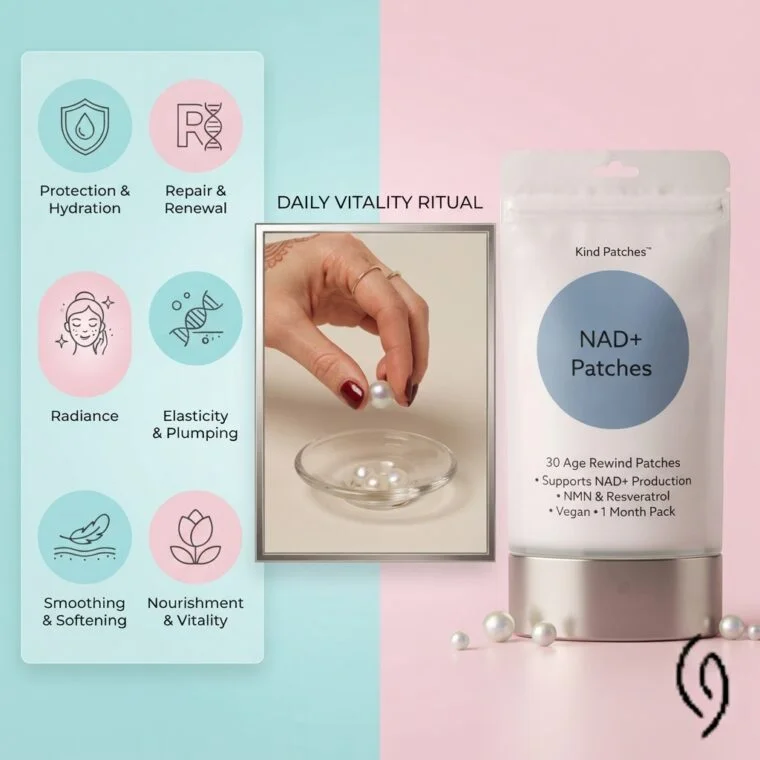
About NAD+ Patches
NAD+ Patches are wearable wellness patches formulated around ingredients associated with nicotinamide adenine dinucleotide, commonly abbreviated as NAD. NAD is naturally present in cells and plays an essential role in energy metabolism, electron transfer, and several cellular processes. Cleveland Clinic notes that NAD exists primarily as NAD+ and NADH and is fundamental to converting nutrients into usable cellular energy.
The important distinction is that the patches do not simply contain evidence-proven transdermal NAD+ therapy. Products in this category commonly use NAD-related precursors and other wellness ingredients, while most human research examining increases in NAD has studied oral NMN supplementation, not consumer skin patches.
NAD+ Patches Features
The marketed formula combines several wellness ingredients commonly discussed in NAD and healthy-aging research:
- Nicotinamide mononucleotide, or NMN
- Resveratrol
- N-acetylcysteine, commonly abbreviated NAC
- Lion’s mane mushroom extract
- Cordyceps extract
- Wearable patch format
- Single-use product design
- Adult wellness positioning
These ingredients should be evaluated separately because they have different biological roles and very different levels of supporting human evidence.
What NAD+ Actually Does In The Body
NAD is a coenzyme found throughout the body. One of its central roles is transferring electrons during metabolic reactions, which allows cells to convert food into usable energy.
NAD also participates in processes related to DNA repair, cell signaling, and metabolism. Cleveland Clinic notes that NAD levels can change with age, although research is still ongoing into whether deliberately increasing NAD translates into meaningful improvements in health or aging outcomes.
That makes NAD biologically important, but biological importance alone does not prove that every commercial NAD-related product produces measurable benefits.
NMN Is A Precursor Rather Than NAD+ Itself
NMN stands for nicotinamide mononucleotide. It is one of the molecules the body can use when producing NAD.
This distinction matters when reading the name NAD+ Patches. A product containing NMN should not automatically be described as delivering NAD+ directly into cells.
Human studies have found that orally administered NMN can increase measured blood NAD concentrations. One randomized controlled trial examining oral doses up to 900 mg per day found increases in blood NAD concentrations, although the study investigated oral supplementation rather than patches.
A newer meta-analysis involving 12 randomized studies and 513 participants similarly found that NMN supplementation increased blood NAD levels overall, while most clinically relevant health outcomes were not significantly different from control groups.
That is a useful reminder that increasing a biomarker is not automatically the same thing as producing a noticeable health benefit.
Transdermal Evidence Is The Major Uncertainty
The biggest scientific question around this product format is not whether NMN has been researched. It is whether the ingredients contained in a consumer patch reliably cross human skin in meaningful quantities.
The skin barrier is deliberately difficult for many substances to penetrate. Successful pharmaceutical transdermal systems require careful control of molecular size, formulation, dose, patch materials, permeation characteristics, and delivery kinetics.
The human NMN studies currently cited most frequently use oral capsules or other non-patch administration methods. They therefore cannot establish the absorption or effectiveness of an NMN-containing skin patch.
Claims about superior bioavailability or guaranteed entry into the bloodstream should consequently require product-specific pharmacokinetic evidence rather than being inferred simply because the product is attached to skin.
What Current Human NMN Research Shows
The research is interesting but still developing.
A randomized trial involving adults receiving oral NMN found increased blood NAD concentrations and reported that the tested oral doses were generally well tolerated during the study period.
Other controlled research has examined outcomes such as physical performance and sleep-related measures. However, results have been inconsistent across outcomes, participant groups, doses, and study designs.
A recent systematic review of NAD-boosting interventions concluded that NAD augmentation demonstrates biological activity but that evidence for meaningful anti-aging or general wellness benefits remains inconclusive.
For a product page, that is more accurate than describing NAD-related ingredients as scientifically proven to reverse aging.
Resveratrol Has A Different Research Profile
Resveratrol is a plant-derived polyphenol associated with grapes and several other botanical sources.
It is frequently included in antioxidant and longevity-focused formulas because laboratory research has investigated its interaction with oxidative stress and cellular signaling pathways.
However, resveratrol should not be described as an established anti-aging treatment simply because it has antioxidant properties. Human outcomes depend on dose, bioavailability, treatment period, population, and the outcome being measured.
Its presence in a patch should also not be treated as evidence that clinically meaningful amounts reach systemic circulation without direct absorption data from the finished patch.
Understanding NAC
N-acetylcysteine, or NAC, is a compound related to the amino acid cysteine and is used medically in specific circumstances.
Its inclusion in general wellness products usually centers on its relationship with glutathione and antioxidant biology.
That medical history does not mean a low-dose cosmetic or wellness patch should be presented as equivalent to clinically administered NAC. Route of administration and dose can change exposure substantially.
For an informational product description, NAC is therefore best identified as one component of the formula rather than being assigned unsupported detoxification, disease-prevention, or anti-aging claims.
Lion’s Mane And Cordyceps Are Botanical Ingredients, Not Proof Of Cognitive Or Energy Effects
Lion’s mane and cordyceps are fungi used in a variety of wellness products.
Research has investigated their biological constituents, but adding mushroom extracts to an NAD-themed patch does not establish that the finished product improves memory, concentration, athletic endurance, or cellular energy.
The same transdermal question also applies: research involving orally consumed mushroom extracts cannot automatically demonstrate delivery from a skin patch.
These ingredients therefore contribute to the formula’s wellness positioning, but claims about specific cognitive or performance outcomes require appropriate finished-product evidence.
NAD+ And Anti-Aging Claims Need Context
NAD biology is closely connected with aging research because cellular NAD availability changes across the lifespan and participates in metabolic and repair pathways.
Researchers are actively investigating whether manipulating NAD metabolism could eventually have therapeutic value. A review of NAD-related regenerative medicine describes the molecule’s important roles while also highlighting the complexity of translating cellular and animal findings into human interventions.
That is very different from proving that an over-the-counter patch reverses aging.
Terms such as age-defying, longevity, cellular rejuvenation, youthful energy, or anti-aging should therefore be treated as marketing language unless they are accompanied by strong product-specific human clinical evidence.
Patch Format Versus Oral NMN Research
The route of administration is one of the most important technical details when comparing studies.
Researchers have evaluated oral NMN at doses far higher than the small quantities typically incorporated into wellness patches. Studies also show that administration route can affect the way NMN is distributed and metabolized.
A study showing a biological response after swallowing NMN therefore does not establish the same response from applying a much smaller amount to the skin.
This is why evidence from oral NMN trials should be described as background research on NMN, not direct clinical validation of NAD+ Patches.
What The Evidence Does Not Yet Establish
Current research does not justify claiming that a consumer NAD+ patch has been proven to:
reverse biological aging, prevent age-related disease, permanently increase energy, improve cognition, repair DNA throughout the body, improve athletic performance, or reliably raise blood NAD concentrations.
Some of those outcomes remain active research questions even for substantially better-studied oral NAD precursors.
The most scientifically responsible description is that NAD+ Patches are a wellness patch format containing NAD-related and antioxidant-focused ingredients, with product-specific transdermal efficacy still requiring stronger clinical evidence.

Reviews
There are no reviews yet.