Tortoise 6″ Hair Cutting and Trimming Shear
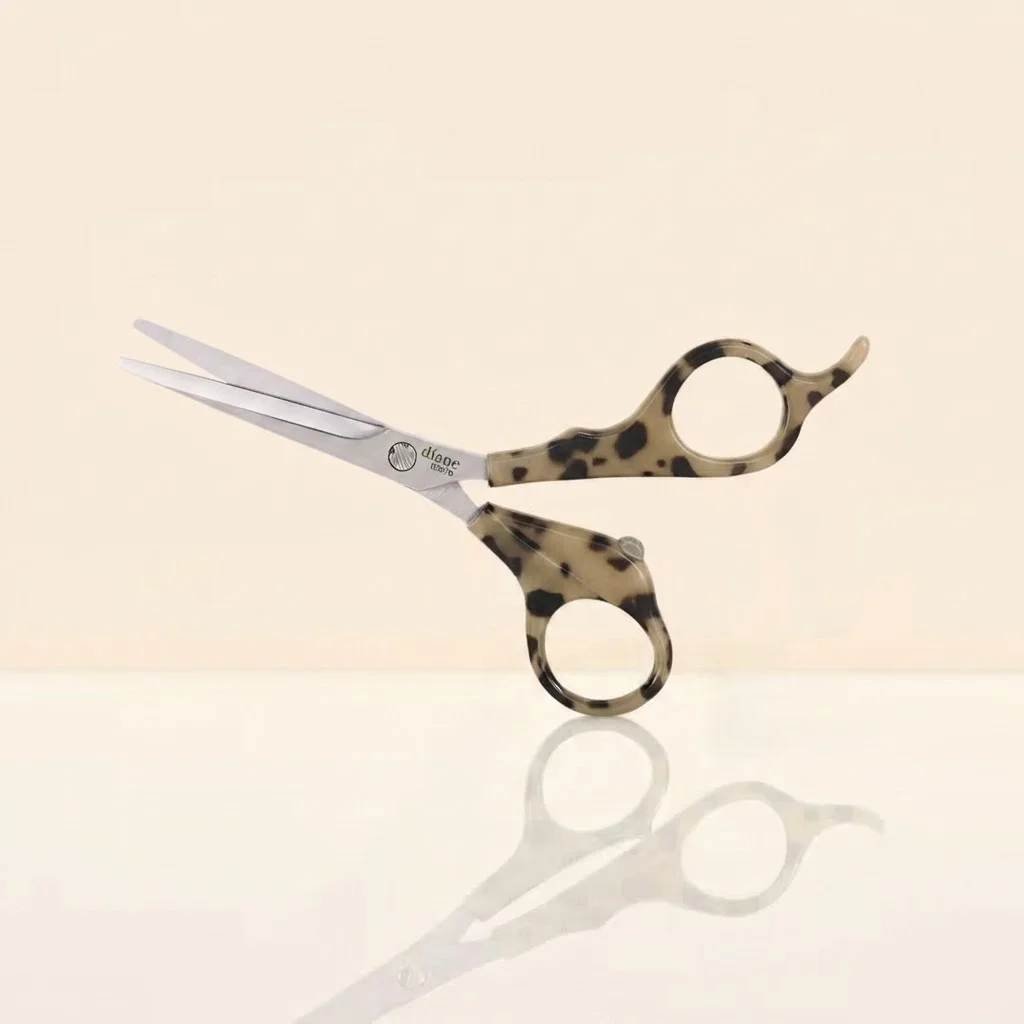
Diane Tortoise 6″ Hair Cutting and Trimming Shear is a compact hair-cutting tool designed for straightforward maintenance trims, fringe work, and general at-home haircut upkeep. Its construction centers on Japanese steel, a long-lasting beveled cutting edge, a semi-offset handle, and a fixed finger rest, giving it a more purpose-built design than ordinary household scissors. The current retail listing identifies the product as a 6-inch shear and item number 2621547.
For shoppers putting together a wider hair-maintenance routine, the shear fits naturally alongside products in HotScope’s Hair Care collection, where cleansing, conditioning, scalp care, and styling support can be considered separately from the actual cutting tool.
Tortoise 6″ Hair Cutting and Trimming Shear Features
- Brand: Diane
- Product type: Hair cutting and trimming shear
- Size: 6 inches
- Blade style: Beveled cutting edge
- Blade material: Japanese steel
- Handle: Ergonomic semi-offset design
- Finger support: Fixed finger rest
- Primary purpose: Hair cutting, maintenance trims, and fringe trimming
- Positioning: At-home hair-cutting tool
- Retail item number: 2621547
- Maintenance characteristic: Beveled edge is marketed as long-lasting and less dependent on frequent sharpening
- Design focus: Controlled hair cutting rather than household multipurpose use
The current Diane listing specifically highlights Japanese steel, the beveled blade, semi-offset handle, and fixed finger rest as the defining construction details.
Japanese Steel Gives The Shear A Hair-Cutting Focus
The choice of steel matters because hair shears repeatedly bring two precisely aligned cutting edges together. A material that can maintain a consistent edge is therefore much more important than it would be on ordinary craft scissors.
Diane describes the Tortoise shear as being made with Japanese steel and positions that steel as both high quality and long lasting.
The phrase “Japanese steel” alone does not tell us the exact alloy, hardness rating, heat treatment, or manufacturing origin of the finished shear. Those technical specifications are not provided in the current retail description, so they should not be invented.
What can be said accurately is that the shear uses steel selected specifically for repeated hair-cutting work and is paired with a beveled cutting edge designed around durability.
That makes it different from using ordinary household scissors on hair. Household blades may be shaped and sharpened for paper, packaging, fabric, or general utility rather than for consistently cutting small sections of hair.
The Beveled Blade Prioritizes Durability
The Tortoise 6″ Shear uses a beveled blade rather than advertising a convex salon-shear edge.
Diane’s main benefit claim is that this blade style is long lasting and does not require frequent sharpening. That makes sense for a tool aimed primarily at occasional maintenance rather than intensive all-day salon work.
Keeping a cutting tool properly maintained is relevant to both performance and ergonomics. OSHA’s guidance on scissor work and hand-tool maintenance notes that maintaining and sharpening scissors can reduce the amount of hand force needed during repetitive cutting.
For an occasional home trim, sharpening may not be needed very frequently. A shear that begins folding, catching, or pulling strands rather than cutting cleanly, however, should not simply be forced through the hair with more hand pressure.
The Semi-Offset Handle Is More Than A Visual Detail
One of the more useful design choices is the semi-offset handle.
Traditional straight-handled scissors position the two finger rings more symmetrically. An offset or semi-offset configuration changes the relationship between the thumb and finger positions, which can help create a more relaxed hand posture for some users.
Diane combines that shape with a fixed finger rest, giving the hand another support point while the shear is being held.
This becomes increasingly relevant during repeated cutting movements. OSHA’s ergonomic guidance for scissors explains that awkward wrist positions and repetitive squeezing can contribute to hand and wrist strain, while tools designed around a more neutral joint position can reduce unnecessary stress.
The same ergonomic principle appears in OSHA’s broader hand and wrist tool guidance, which recommends appropriately designed tools that allow the wrist to remain as straight as practical during finger-intensive work.
That does not mean one semi-offset shear will fit every hand perfectly. Finger-ring size, hand size, cutting frequency, and preferred grip all affect comfort.
A Six-Inch Shear Offers A Practical Middle Ground
Diane sells this model as a 6-inch shear, placing it between very compact detail scissors and considerably longer professional cutting shears.
That size gives the tool enough blade length for general trimming while remaining manageable for smaller sections around a haircut.
It also helps explain why Diane markets it for straightforward maintenance jobs rather than only one specialized cutting technique.
For someone maintaining the overall condition of recently trimmed hair, cutting is only one part of the routine. HotScope’s Shampoo & Conditioner collection provides a useful next step for comparing cleansers and conditioners without confusing hair-fiber care with the mechanical job performed by a shear.
Clean Hair And Manageable Strands Make Maintenance Easier
A trimming tool cannot compensate for hair that is heavily tangled, coated with styling residue, or difficult to control.
The American Academy of Dermatology recommends gentle hair-care practices that reduce unnecessary breakage, including appropriate shampooing, regular conditioning, and careful detangling. Its guidance on preventing everyday hair damage notes that conditioner helps improve manageability while reducing breakage and split ends.
This matters when assessing a haircut after trimming. A rough or tangled section can behave differently from smooth, manageable hair and can make it harder to judge the natural fall of the strands.
A conditioning product such as HotScope’s Wellness Premium Hydration Conditioner can therefore play a complementary role when dryness and tangling are part of the broader hair-care concern.
It is still important to keep products off the shear itself while cutting. Hair oils, creams, sprays, and conditioners can accumulate around moving metal parts and should not be treated as shear lubricants.
Trimming Split Ends Does Not Repair The Remaining Hair
Hair-cutting shears are often purchased when the ends have become visibly uneven, rough, or split.
Cutting away damaged ends can improve the appearance of the perimeter, but trimming does not biologically repair the remaining strand. Hair outside the scalp is a nonliving fiber, so products and tools primarily change its surface condition, manageability, and appearance.
The American Academy of Dermatology’s guidance on styling hair without damage explains that excessive brushing, heat, and other mechanical stresses can contribute to breakage and split ends.
That distinction is useful when deciding where this Diane shear fits into a routine. The shear removes unwanted length or damaged ends mechanically. Shampoo, conditioner, leave-in products, and gentler styling habits address different parts of maintaining the remaining hair.
For hair that tends to feel flat after trimming, for example, HotScope’s Bamboo and Hibiscus Volumizing Shampoo addresses cleansing and cosmetic body rather than the cutting process itself.
Hair Texture Can Change The Experience Of A Trim
Straight, wavy, curly, and tightly coiled hair do not fall in identical ways, so the same shear can feel different depending on the texture being maintained.
Curly and tightly textured hair can also be more vulnerable to breakage when handled aggressively. The American Academy of Dermatology’s guidance for caring for textured hair emphasizes moisture, gentle handling, and reducing practices that place unnecessary stress on fragile strands.
The Tortoise shear itself is not marketed for only one hair texture. Its 6-inch cutting format is intended as a general trimming tool.
What changes is the haircutting context. A simple perimeter maintenance trim is very different from creating technical layers, correcting an uneven shape, or restructuring a highly textured haircut. More complicated changes are better left to someone with appropriate haircutting experience.
Shear Care Affects Cutting Performance
A quality cutting edge can only perform properly when the tool itself is maintained.
Loose residue should be removed after hair cutting, and the shear should be stored somewhere dry and protected rather than thrown loosely into a drawer with hard objects that can contact the edges.
The pivot and blade area should also remain free from excessive hair-product buildup.
OSHA’s scissor-maintenance guidance specifically connects well-maintained, clean, appropriately sharpened tools with reduced operating force during repeated cutting. That principle applies even when a shear is used only occasionally.
Sharpening should also be treated as a specialist maintenance task rather than experimenting on the cutting edge with a household sharpener. Hair shears depend on blade alignment and edge geometry, and changing that geometry can affect performance.
Diane’s beveled blade is specifically marketed as requiring less frequent sharpening, not as a blade that will never need maintenance.
Safe Storage Matters With A Sharp Hair Tool
Unlike ordinary combs, clips, or brushes, a hair shear has sharpened cutting edges and should be stored accordingly.
The American Academy of Pediatrics advises keeping sharp instruments such as scissors out of children’s reach and separating them from ordinary safe household items. Its home safety guidance for sharp tools reflects the same basic storage principle that applies to grooming shears.
When not being used, the blades should be closed and the shear should be placed somewhere stable where it cannot be accidentally grabbed or knocked onto the floor.
For households where children are present, the product should be treated as an adult grooming tool rather than as the type of child-safe scissors used for crafts.
Diane markets the shear as suitable for maintaining children’s hair, but that describes the haircut being performed, not the suitability of the sharp tool for a child to handle.
Tortoise Cutting Shear And Thinning Shear Are Different Tools
The 6″ Tortoise model is a cutting and trimming shear.
Diane also sells a Tortoise 6.25″ thinning and texturizing shear, but the two products perform different jobs. The standard 6-inch shear uses two cutting blades for removing length, while a thinning or texturizing shear is designed to remove only part of the hair passing between its blades.
That distinction matters when shopping because the similar Tortoise appearance and nearly identical names can make the products easy to confuse.
For basic end maintenance, fringe trimming, and straightforward length removal, the standard cutting shear is the appropriate member of the pair.
Hair Care After A Fresh Trim
A clean perimeter can make the ends appear healthier immediately, but the way the hair is treated afterward determines how quickly roughness and breakage return.
The AAD recommends gentle shampooing, regular conditioning, limiting excessive heat, and reducing styling practices that repeatedly pull or damage the fiber. Its hair-loss and breakage prevention advice also notes that conditioning can reduce breakage and split ends in fragile hair.
HotScope’s Hair Care collection brings these supporting products together, while Hair Tonic Revitalizing represents a scalp-focused product rather than something that changes the cutting performance of the shear.
Keeping those functions separate makes the routine easier to understand: the shear controls length and shape, while cleansing, conditioning, scalp care, and styling products affect the condition and appearance of the hair between trims.
What Makes Tortoise 6″ Hair Cutting and Trimming Shear Different
Diane’s Tortoise 6″ Hair Cutting and Trimming Shear is intentionally uncomplicated. There are no interchangeable blades, electronic components, or multiple cutting attachments. Instead, its value comes from a focused combination of Japanese steel, a durable beveled edge, a 6-inch format, semi-offset ergonomics, and a fixed finger rest.
That construction makes it most suitable as a dedicated hair-maintenance tool rather than a replacement for household scissors or a highly specialized professional shear.
The beveled blade favors durability, while the semi-offset handle and finger rest address hand position and control. Proper cleaning, protected storage, and professional sharpening when eventually required can help preserve those characteristics.
For straightforward hair maintenance, the Tortoise shear fills a clear role within a wider routine: a dedicated cutting tool for removing length and tidying the shape of the hair, supported by appropriate cleansing, conditioning, and gentle hair-care practices between trims.
:::



Reviews
There are no reviews yet.