


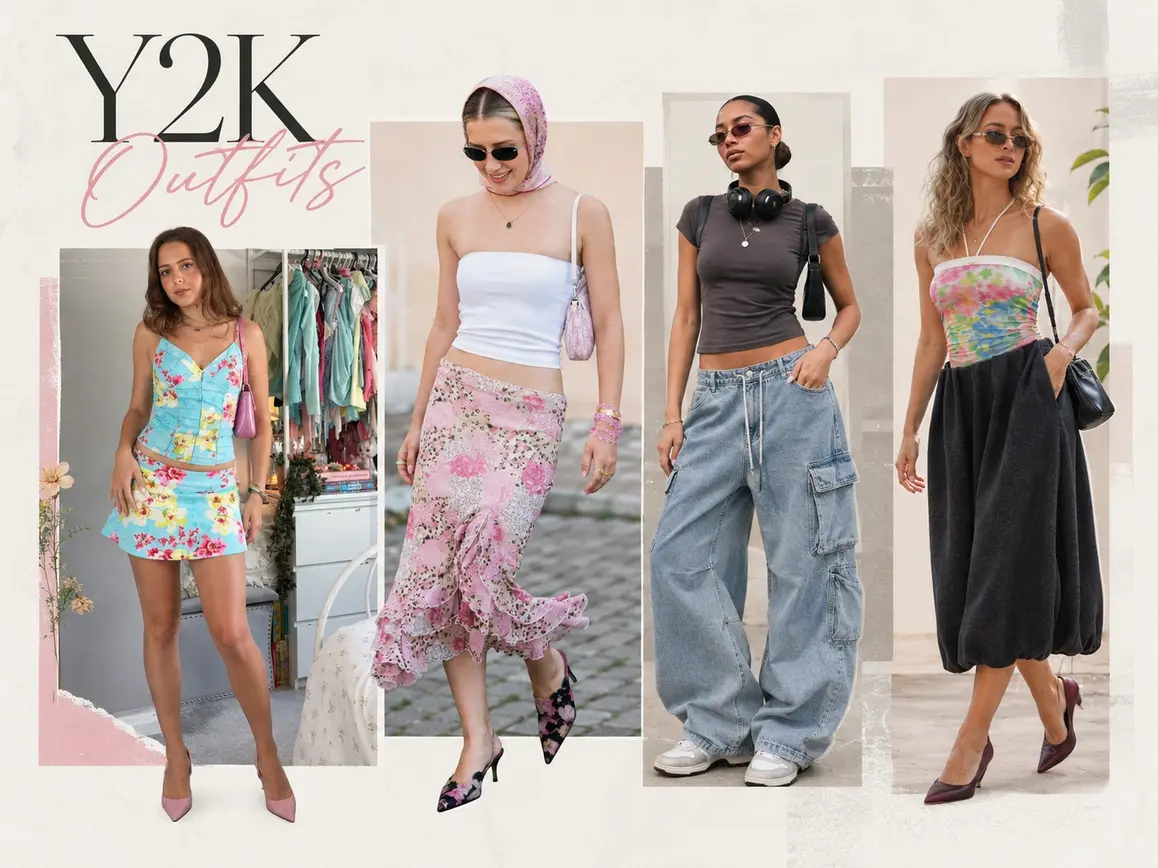
The outfit looked exactly right in my bedroom mirror and completely wrong by 10:15 that morning.
I had gone all in: low-rise cargo pants, a cropped baby tee, narrow tinted sunglasses, a tiny shoulder bag, chunky sneakers, and two shiny clips holding back the front of my hair. Individually, I liked almost everything. Together, I looked as though I had dressed for a 2002-themed party instead of an ordinary Saturday.
The real failure became obvious after I left home. My top kept moving whenever I reached for something. The cargo waistband needed more attention than I wanted to give it. My little bag held my phone and almost nothing else. By the time I stopped for coffee, I had taken off the sunglasses, removed the hair clips, and wished I had worn my normal straight-leg jeans.
I still loved Y2K fashion. I simply did not love being swallowed by it.
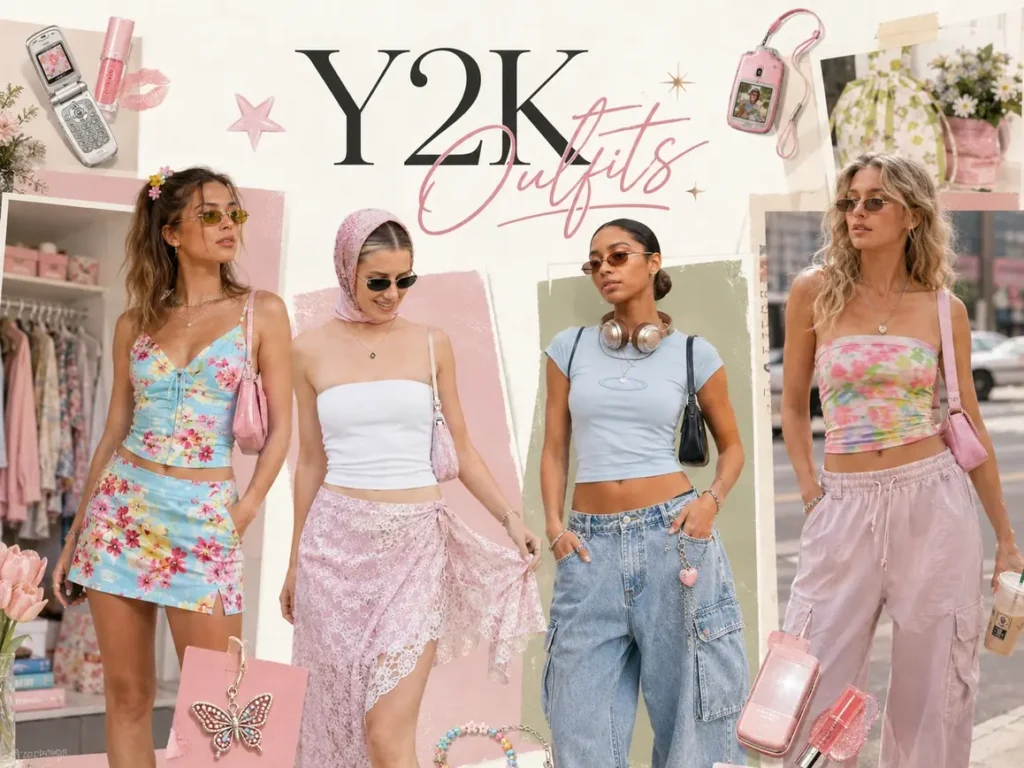
That morning changed how I approach trends at Hotscope. I stopped asking how accurately I could recreate an era and started asking which parts of that era genuinely improved the clothes I already wore.
I’m Maria Toussaint, and these are the Y2K outfits I’m loving now because they finally feel like my wardrobe rather than a costume.
I Was Recreating the Decade Instead of Dressing Myself
Y2K fashion is not one single look.
The late 1990s and early 2000s mixed minimal camisoles, low-rise denim, cargo pants, tracksuits, metallic finishes, rhinestones, tiny handbags, platform footwear, fitted tees, visible logos, playful hair accessories, and a huge amount of denim.
The Victoria and Albert Museum’s look back at recognizable Y2K fashion trends highlights everything from cargo trousers and ultra-low-rise jeans to butterfly clips, matching tracksuits, trucker hats, and double denim.
That variety should have been my clue.
I did not need to wear all the references together.
Fashion from the period itself was not one tidy uniform either. The Museum at FIT’s record of its 2001 London Fashion exhibition shows how different designers and street influences were already coexisting at the beginning of the decade. Fashion was experimental, contradictory, polished in one place and deliberately casual in another.
Yet my first attempt at Y2K dressing had treated the era like a checklist.
Low rise? Yes.
Tiny bag? Yes.
Chunky shoe? Yes.
Baby tee? Yes.
Colored glasses? Yes.
Hair clips? Of course.
The result contained plenty of Y2K references but very little Maria.
That is the problem I now notice whenever a trend becomes popular again. We often copy its most recognizable features because they make the trend easy to identify. But recognizable is not the same as wearable.
I did not need people to look at me and immediately say, “Y2K.”
I needed to get dressed, leave the house, and still feel like myself three hours later.
The Low-Rise Jeans Taught Me the Most
The jeans were where my enthusiasm met reality.
I had become convinced that I needed a genuinely low-rise pair because anything higher felt like cheating. I found one with a faded wash, slightly flared leg, and small back pockets. Standing in the fitting room, they looked exactly like the jeans I had imagined.
Then I sat down.
The waistband moved.
I stood up and adjusted it.
I bent to pick up my bag and adjusted it again.
That should have ended the experiment, but I bought them anyway because I was judging the jeans by the trend rather than by the fit.
This was not a body problem. It was a garment decision.
Sizing labels alone cannot tell you exactly how a garment will sit because clothing dimensions and body dimensions are not the same thing. The International Organization for Standardization maintains clothing sizing and body-measurement standards precisely because fit depends on defined measurements rather than the emotional meaning shoppers attach to a number on a tag.
Once I stopped insisting on an extreme rise, Y2K denim became much easier to wear.
I moved slightly upward.
Not all the way to the highest waist I owned. Just high enough that the jeans stayed in place when I sat, walked, and worked.
That small compromise made the whole reference more believable on me.
The faded wash still gave me the early-2000s feeling. A straighter or slightly flared leg still connected to the era. A shorter fitted top still changed the proportion. I did not need the waistband to sit at the lowest possible point for the outfit to make sense.
That was one of the first lessons I kept from this experiment: a trend survives adaptation better than discomfort.
My Favorite Y2K Outfit Started With Jeans I Already Owned
The outfit that finally worked was almost embarrassingly simple.
I wore relaxed blue jeans I had owned for more than a year, a fitted white tee, a narrow black belt, small silver hoops, and a compact shoulder bag.
The only new piece was the bag.
Nothing about the outfit shouted early 2000s, but the combination felt familiar enough to reference the period.
The fitted top against the looser denim created the proportion I had been trying to achieve. The small bag added the nostalgic detail. Silver jewelry gave it a slightly sharper finish.
Most importantly, I could wear it for an ordinary day.
I could work in it.
I could drive in it.
I could sit through lunch without thinking about the waistband.
I could swap the shoes.
I could put a jacket over it.
That was the point where Y2K stopped being an aesthetic I was trying on and started becoming part of my wardrobe.
It also matched something I have learned from building outfits more generally: a trend is easier to keep when it connects to pieces you already understand.
Hotscope’s guide to creating a capsule wardrobe for all seasons approaches clothing from that practical direction. The value of a wardrobe is not the number of interesting individual pieces inside it. It is how easily those pieces can work together.
My Y2K experiment improved when I stopped buying complete outfits and started adding one useful reference at a time.
Cargo Pants Worked Better Once I Stopped Styling Them Like a Music Video
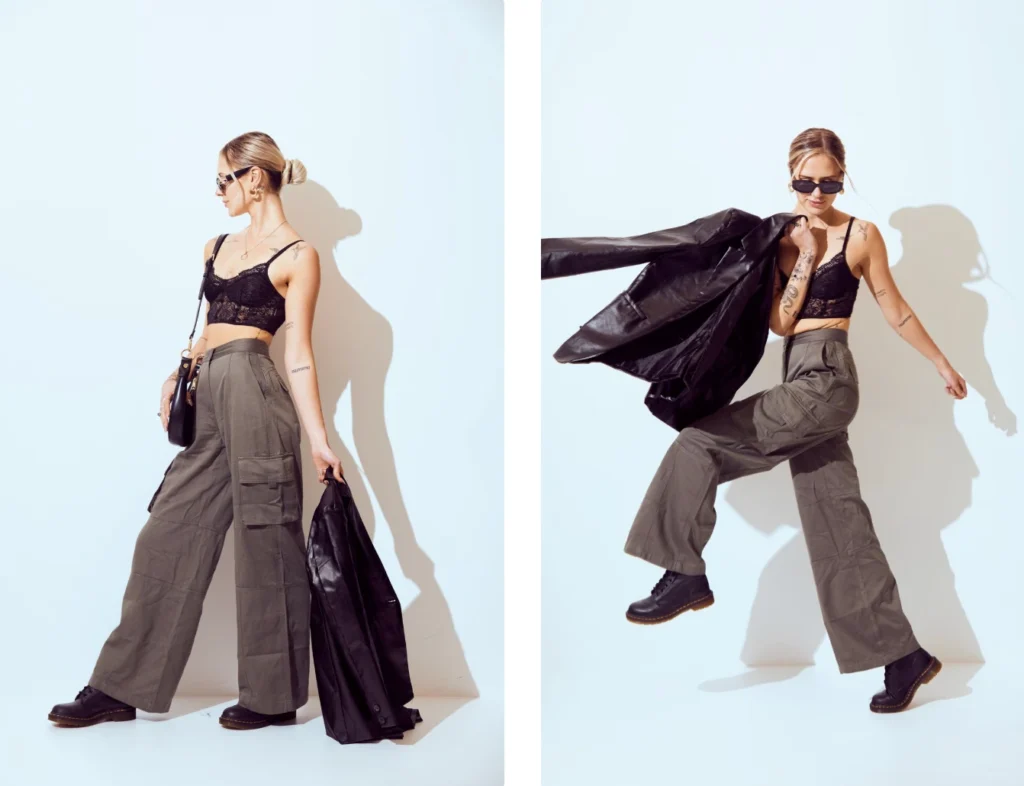
Cargo pants were the next piece I almost gave up on.
My first pair was shiny, oversized, and covered in pockets. I paired them with a tiny top and chunky shoes because I wanted the silhouette to feel obvious.
Again, the styling was technically correct and personally wrong.
There was too much volume below my waist and too little structure anywhere else. I felt as though the clothes arrived before I did.
The cargo trousers I wear now are simpler. They still have recognizable side pockets, but the fabric is softer and the leg falls more cleanly.
I wear them with a plain tank, fitted knit, button-down shirt, or cropped jacket.
That combination taught me something useful about revival trends: the most recognizable version is not always the most versatile version.
A slightly quieter interpretation can actually be worn more often.
This matters before buying because trend-driven shopping can create wardrobes full of garments that feel exciting for a month and strangely difficult afterward. UNEP reported in 2025 that global textile waste remains enormous and that the duration garments are used has fallen significantly as clothing production has increased. Its discussion of fashion and textile waste is a useful reminder that buying every revival as a fresh wardrobe is not a harmless cycle.
I now ask myself a slightly uncomfortable question before purchasing a trend piece:
Would I still want this if nobody called it Y2K?
If the answer is yes, I pay attention.
If the answer is no, I usually leave it.
The Baby Tee Needed the Right Bottom Half
I resisted baby tees at first because I associated them too strongly with teenage styling from the original Y2K period.
Then I found a plain fitted tee with slightly shorter sleeves and a length that met the waistband of my jeans instead of ending far above it.
That tiny difference made the whole category usable.
I realized that I did not need an extremely cropped top to create the proportion. What I liked was the closer fit and compact shape.
Now I wear fitted tees with:
- Relaxed jeans
- Cargo pants
- Long denim skirts
- Wide-leg trousers
- An open oversized shirt
- A simple blazer
The tee provides the Y2K reference. The rest of the outfit keeps it grounded in the way I actually dress now.
I made the same adjustment with camisoles.
Instead of buying very thin, difficult-to-style versions, I choose ones with enough coverage and structure to work under a shirt or light jacket. Lace trim or a slightly glossy fabric can bring in the early-2000s mood without turning the whole outfit into a reproduction.
That distinction matters to me now.
I am not trying to dress exactly as I would have dressed twenty years ago.
I am borrowing shapes and details from that period because some of them are genuinely fun.
Double Denim Looked Better After I Stopped Trying to Match It
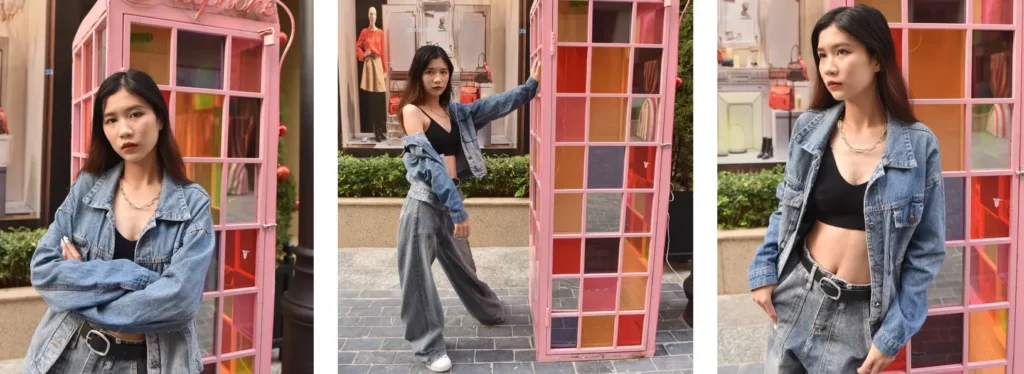
I expected double denim to be one of the easiest Y2K ideas.
It was not.
My first instinct was to make the two denim pieces almost identical. Similar blue jacket, similar blue jeans, similar fading.
Instead of looking deliberate, it looked like I had tried very hard to find a matching set and missed slightly.
The outfit improved when I separated the washes.
Dark jeans with a lighter denim shirt worked.
Mid-blue jeans with a washed jacket worked.
A denim skirt with a simple chambray-style shirt worked.
Once there was enough contrast, each garment had its own role.
The V&A includes denim mania and double denim among its recognizable early-2000s references, but that does not mean an everyday version needs to duplicate a famous red-carpet look from the period.
The lesson here became broader than denim.
Historical inspiration is more useful when I understand what I like about it.
Was it the fabric?
The silhouette?
The contrast?
The styling attitude?
Once I know that, I can stop copying the surface.
Tiny Shoulder Bags Exposed My Biggest Trend-Shopping Weakness
I love tiny bags.
I also carry too much.
Those two facts had been fighting each other for years.
The first Y2K-style shoulder bag I bought barely fit my phone. It looked excellent tucked under my arm, especially with a fitted tee and jeans.
Then I tried to add sunglasses.
Then keys.
Then a cardholder.
Then lip balm.
The bag became a daily puzzle.
I kept carrying it because I liked the shape, but I also carried another tote because I needed somewhere to put everything the small bag could not hold.
At that point, I had to admit that I was serving the accessory instead of the accessory serving me.
My compromise was not abandoning the shape. I bought a slightly larger shoulder bag with the same short strap and compact early-2000s profile.
It still reads Y2K.
It also holds my actual belongings.
That is subtle commercial-investigation territory I wish fashion content discussed more often. When evaluating a trend item, the important question is not only whether it looks right.
Ask what it does.
Does the bag hold what you carry?
Does the shoe survive the distance you normally walk?
Does the jacket close over your normal layers?
Can the skirt handle sitting?
Can you wash the top realistically?
Style does not end at checkout.
I Started Reading the Fabric Label Before the Trend Label
One of my favorite things about Y2K fashion is the mixture of textures: denim, jersey, shiny synthetic surfaces, mesh, ribbing, velour, satin-like fabrics, and metallic finishes.
One of my least favorite things is how bad some inexpensive versions of those textures can feel.
A trendy top may photograph beautifully and still become uncomfortable after an hour.
I learned this with a shiny fitted shirt that looked almost identical to one I had saved online. In the store, the reflective surface made it look expensive.
At home, it trapped heat and clung in every place I did not want it to.
I had barely looked at the fiber content.
The FTC’s textile labeling requirements require covered textile products sold in the United States to disclose fiber information, along with other labeling details. That information is worth checking before a purchase because two tops that look nearly identical can behave very differently depending on their fiber composition and construction.
Now I check the label.
Not because one fiber is automatically good and another bad.
I want to understand what I am buying.
Does the fabric stretch?
Does it recover after stretching?
Will it trap heat?
Does it wrinkle immediately?
Does it need special care?
Will it survive the way I actually wash clothes?
That last question became especially important with embellished Y2K pieces.
Rhinestones, decorative printing, metallic finishes, and glued details can make an ordinary laundry routine more complicated. The FTC’s clothing care-label guidance explains why manufacturers and importers must provide regular care instructions. I now read those instructions before paying rather than discovering at home that a casual-looking top requires more maintenance than I want to give it.
A trend piece loses its charm quickly when I am afraid to wash it.
I Was Surprised by How Much I Liked the Sportier Side of Y2K
I expected denim and tiny bags to become my favorites.
Instead, some of the sportier references became the easiest pieces to repeat.
A zip-front fitted jacket with relaxed trousers.
A simple track-inspired top with straight jeans.
A fitted tank with loose pants and clean sneakers.
A cropped sweatshirt with a longer skirt.
These outfits reference the early 2000s without needing rhinestones or logos.
They also fit the way I actually move through a day.
That matters more to me now than historical accuracy.
I want an outfit that can survive errands, work, coffee, driving, and an unexpected change in plan.
Hotscope’s fashion styling services are built around the same principle of adapting trends to a person’s existing clothes, proportions, budget, and actual schedule rather than treating every trend as a reason to start shopping again.
That is also how I judge trend pieces for myself.
If the garment creates more outfit possibilities, I become interested.
If I have to buy three additional things before I can wear it once, I become suspicious.
Accessories Became the Safest Place for Me to Have Fun
My wardrobe became much easier once I let accessories carry some of the Y2K energy.
I did not need low-rise jeans, a cropped top, platforms, colored lenses, clips, and a tiny bag at the same time.
Sometimes narrow sunglasses were enough.
Sometimes silver hoops did the job.
Sometimes a little shoulder bag changed the entire mood of jeans and a white shirt.
I have worn a simple black dress with a shiny shoulder bag and small metallic hair clips and felt more Y2K than I did in the outfit that originally included every reference at once.
Accessories create a lower-commitment way to experiment because they do not usually dictate the entire silhouette.
They are also easier to remove when I decide the outfit has crossed from interesting into themed.
That last edit is important.
I almost always remove one thing before leaving home now.
Not because minimalism is automatically sophisticated, but because I have learned that my Y2K outfits work best when there is enough visual space for the reference to register.
I Stopped Buying Y2K Pieces That Needed Their Own Wardrobe
There was one metallic skirt I nearly bought because I could picture exactly one incredible outfit with it.
Silver skirt.
White fitted tee.
Narrow sunglasses.
Small black bag.
Platform sandals.
I could see the photograph.
Then I tried to imagine the second outfit.
Nothing came.
That was enough.
A garment does not need to work with everything I own, but I now want at least three believable combinations before I bring a trend piece home.
That rule is not scientifically precise. It is simply one of the most useful shopping limits I have developed.
It has helped me avoid the category of clothing I call “one-image purchases.”
These are pieces that make perfect sense in the single outfit that persuaded me to buy them but have nowhere to go after that.
Research from WRAP on clothing longevity and consumer behavior found that second-hand and preloved garments were often kept longer than newly purchased pieces among surveyed consumers. I find that especially interesting in the context of Y2K because second-hand shopping can provide actual period details while reducing the pressure to buy newly manufactured versions of every revival.
I have started checking second-hand options first for bags, denim, jackets, and accessories.
Sometimes the original is better than the reproduction.
Sometimes it is not.
Vintage sizing can be inconsistent, fabric can deteriorate, elastics can fail, and old synthetic coatings may not age gracefully. I still inspect condition, seams, zippers, odor, stains, stretch recovery, and care requirements.
Second-hand is not automatically a good purchase.
It simply gives me another place to look before buying something new.
My Everyday Y2K Wardrobe Is Much Quieter Now
If you opened my wardrobe today expecting rhinestones on everything, you would probably be disappointed.
My version of Y2K has become subtle.
I wear faded relaxed jeans with fitted tees.
Cargo pants with simple tanks.
A denim skirt with a lightweight knit.
A compact shoulder bag with tailoring.
A sporty zip top with cleaner trousers.
Silver accessories with clothes I have owned for years.
Occasionally I add colored glasses or a playful hair detail when I want the reference to feel more obvious.
That is enough.
UNEP’s guidance on reducing waste in fashion emphasizes keeping clothing and materials in use for longer rather than constantly increasing the volume of new garments. That idea has influenced the way I now approach revival trends. I would rather make an old pair of jeans feel current again than replace half my wardrobe to prove that I understand what is fashionable.
This does not make my wardrobe perfectly sustainable.
It simply makes my trend participation less wasteful and much more personal.
The Outfit Formula That Changed My Thinking
I do not usually reduce personal style to formulas because clothes are more interesting than that.
But one pattern helped me stop overdoing Y2K.
I started with something familiar.
Then I added one obvious early-2000s reference.
Then, if the outfit still felt too ordinary, I added one smaller reference.
That was usually enough.
Relaxed jeans + plain tee + short shoulder bag.
Cargo pants + fitted knit + silver jewelry.
Simple dress + platform-inspired shoes + narrow glasses.
Wide-leg trousers + baby tee + small bag.
Denim skirt + tank + sporty zip jacket.
The outfit remained mine first.
The trend came second.
At one point I wrote 1.Anchor in my styling notes beside a sentence I still use: if the outfit only works because every piece proves the same trend, I probably need to remove something.
That rule has saved me from several purchases.
It has also made getting dressed more enjoyable.
I No Longer Ask Whether I’m Too Old or Too Late for Y2K
Trend revivals often create a strange pressure around who is “allowed” to wear them.
People who remember the original trend may feel silly repeating it.
People who do not remember it may worry about wearing it incorrectly.
I no longer find either concern useful.
Fashion has always revisited earlier ideas. What changes is the context.
The proportions shift.
Fabric technology changes.
Styling changes.
The people wearing the clothes change.
The useful question is not whether I recreated 2001 correctly.
It is whether a particular piece works for me now.
That is why I am comfortable wearing a fitted baby tee with trousers I would never have paired with it twenty years ago.
It is why my “low-rise” jeans are not especially low.
It is why my tiny shoulder bag is slightly too large to qualify as truly tiny.
The references are still visible.
I just no longer sacrifice the way I live to make them historically obvious.
What I Check Before Buying Another Y2K Piece
I have become much slower around trend purchases.
I look at the piece and ask what attracted me first.
If the answer is simply that I have seen it repeatedly online, I wait.
Then I think about my existing wardrobe.
I want to know which shoes I would wear with it, which bag works, whether I already own a suitable layer, and whether I would choose the garment on an ordinary Tuesday.
I check fit in motion rather than standing still.
I read the fiber label.
I read the care instructions.
I look closely at zippers, embellishments, seams, pockets, and stretch.
I consider whether I am buying a useful version of the trend or the loudest possible version.
Most importantly, I ask whether I like the piece or merely recognize it.
That distinction has completely changed my Y2K wardrobe.
Final Note
My first Y2K outfit failed because I wanted the trend to be obvious.
I had assembled recognizable pieces instead of building an outfit around myself. The low-rise pants needed constant adjustment, the bag could not carry my normal belongings, and every accessory was competing to prove the same point.
What finally worked was not abandoning Y2K.
It was becoming less loyal to the costume.
The Y2K outfits I love now are ordinary enough to wear repeatedly. Relaxed denim, fitted tees, cargo trousers, smaller shoulder bags, silver details, sporty layers, and the occasional playful accessory have found places beside clothes I already owned.
I still enjoy the nostalgia. I still like seeing a reference that takes me back to early-2000s fashion.
I simply no longer believe a revival has to be copied literally to count.
For me, the strongest Y2K outfit is the one that still looks like Maria after the trend references are stripped away.