


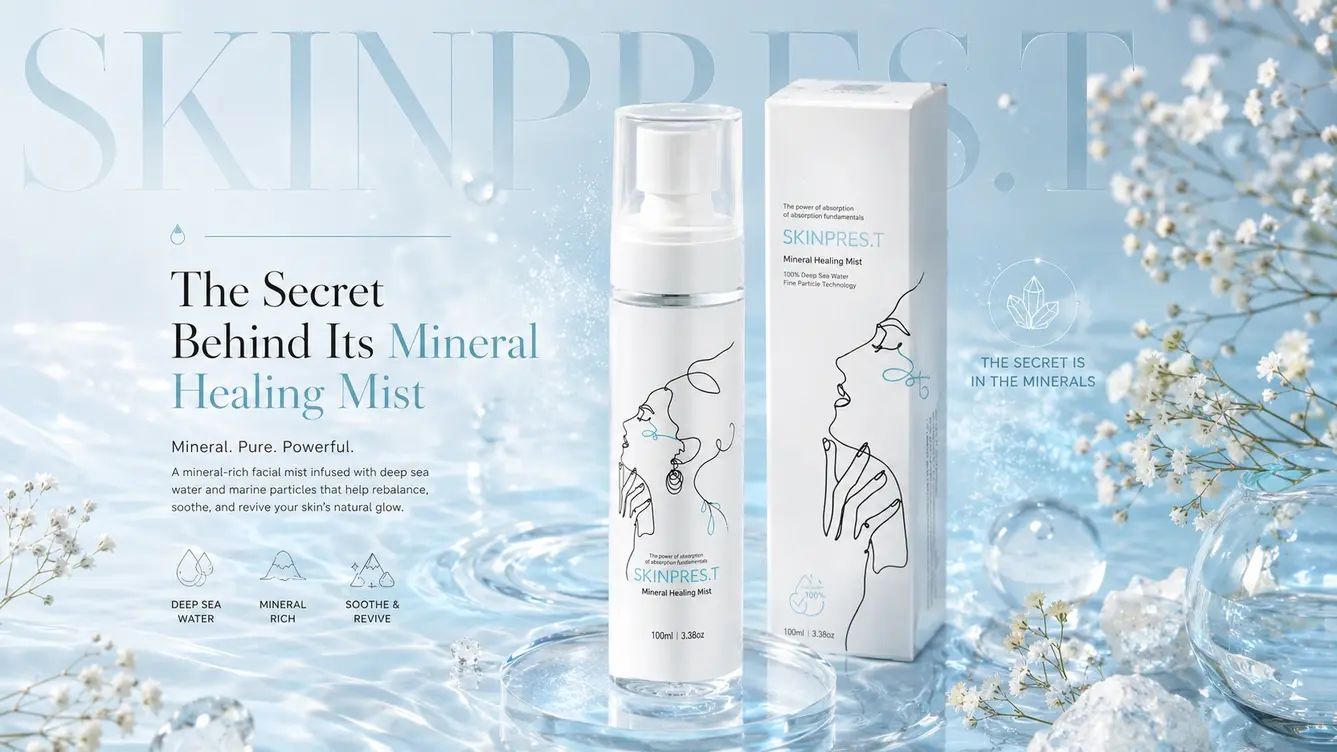
Facial mists are easy to underestimate. A bottle sprays water onto the skin, the face feels cooler for a few minutes, and it can be difficult to tell whether anything meaningful has happened. Skinpres.T Mineral Healing Mist has attracted attention because it presents a much simpler idea: a fine spray based on mineral-rich deep-sea water rather than a long list of fragrances, botanical extracts, oils, and active ingredients.
The real appeal is not that the mist secretly performs the work of an acne treatment, repair cream, or dermatologist procedure. Its value is more practical. It gives the skin a quick layer of moisture in a light format that can fit between cleansing and moisturizing, refresh uncomfortable skin during the day, and make a dry routine feel less heavy.
Understanding what Skinpres.T can realistically do is more useful than accepting every claim printed beside the word “healing.”
What Is Skinpres.T Mineral Healing Mist?
Skinpres.T is a Korean facial mist marketed around a deep-sea-water mineral formula. Brand and retailer materials describe the mist as fragrance-free, preservative-free, surfactant-free, and suitable for sensitive or easily uncomfortable skin. Product descriptions also emphasize a very fine spray designed to distribute moisture evenly without leaving large droplets across the face.
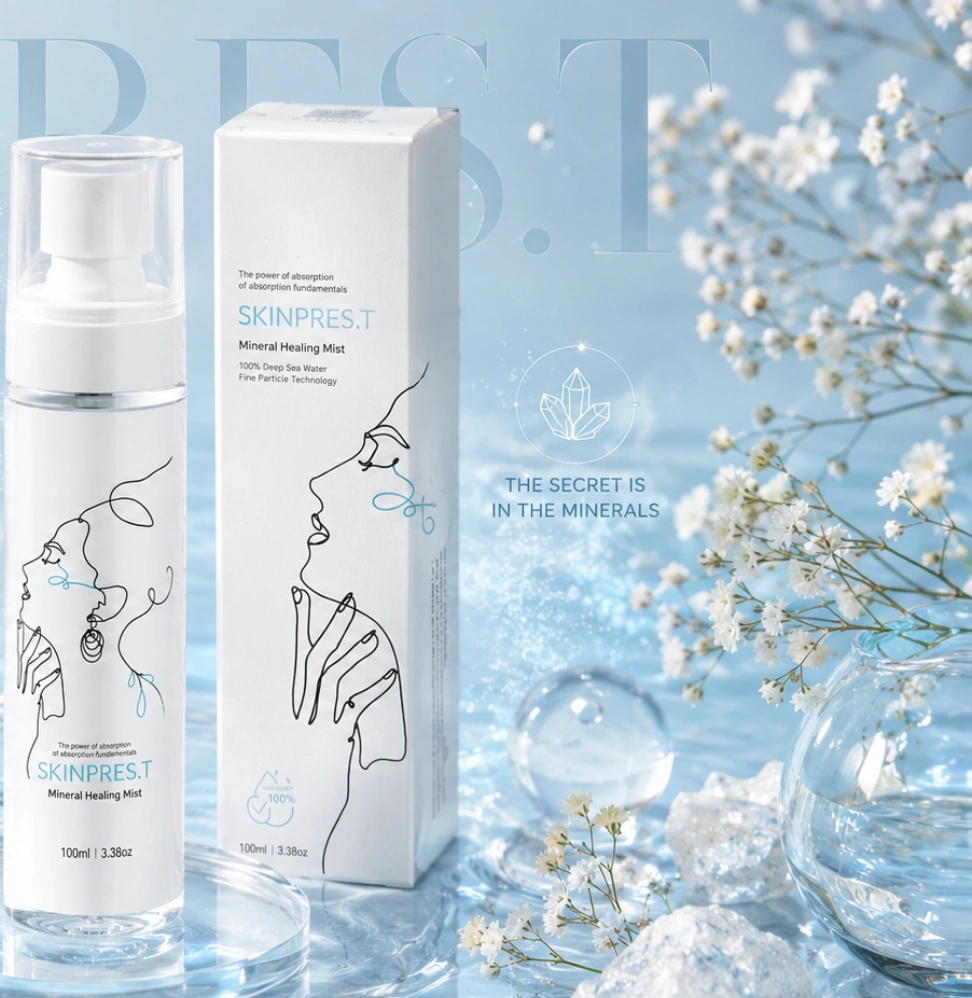
That short description explains why the product interests people who are tired of complicated skincare. Many facial sprays include humectants, fragrances, oils, botanical extracts, acids, or makeup-setting ingredients. Skinpres.T appears to take a narrower approach by making mineral water and the spray system the main features.
A narrow formula can be useful, but it should not automatically be described as better for everyone. A long ingredient list is not necessarily bad, and a short ingredient list is not automatically gentle. Suitability still depends on the condition of your skin, how the product is preserved and packaged, and whether the complete ingredient label matches the claims made by the seller.
The name “Mineral Healing Mist” can also create expectations that are larger than the product itself. Under US rules, the intended use and claims surrounding a product help determine whether it is considered a cosmetic, a drug, or both. A cosmetic can moisturize, soften, refresh, or improve appearance. Claims that a product treats disease or changes the structure or function of the body can move into drug territory. The FDA’s explanation of cosmetic and drug claims is a useful reminder that the word “healing” should not be interpreted as proof that a facial mist treats eczema, acne, rosacea, infection, damaged tissue, or another medical condition.
For most people, a more realistic interpretation is that the mist may temporarily refresh dry-feeling or tight skin and support a comfortable moisturizing routine.
The Real Secret Is Simpler Than the Marketing
There are three practical reasons a mineral mist can feel pleasant on the skin: water, mineral content, and droplet size.
Water temporarily wets the surface of the skin. This can reduce the immediate feeling of tightness, especially after cleansing, time in an air-conditioned room, a flight, outdoor heat, or a long period spent wearing makeup.
Minerals may change how the water feels and interacts with the surface of the skin. Deep-sea and thermal waters can contain combinations of magnesium, calcium, sodium, potassium, and other dissolved minerals, although the exact balance varies by source. That mineral profile matters more than the general phrase “mineral water.”
The spray nozzle also affects the experience. Large droplets can run down the face, disturb sunscreen or makeup, and leave uneven wet patches. A finer mist spreads a smaller amount of liquid over a wider area, which feels lighter and is easier to layer.
Research into fine water particles has found that spraying very small water particles can increase measured facial skin moisture under controlled conditions and may affect transepidermal water loss. That does not prove that every facial mist works identically, but it supports the basic idea that droplet size and application method can influence the way water behaves on the skin. The study should be viewed as evidence for fine-mist delivery in general, not as a clinical trial of Skinpres.T itself. Read the fine-water-particle study.
This distinction is important. A product can use a sensible delivery method without every marketing claim being clinically proven.
The “secret” behind Skinpres.T is therefore not a hidden anti-aging ingredient or a treatment that penetrates several layers of the face. It is a light water-based product, mineral content, and a spray system that makes the moisture easy to distribute.
What Mineral Water Can Realistically Do for Skin

Healthy-looking skin needs enough water in its outer layer, known as the stratum corneum. When this layer loses too much moisture, the face may feel tight, rough, flaky, itchy, or less flexible.
Skin hydration is closely connected to barrier function, environmental humidity, cleansing habits, age, skin conditions, and the products used before and after washing. Scientific reviews commonly assess hydration through measurements such as stratum corneum water content and transepidermal water loss, which describes water escaping through the skin. Research on measuring skin hydration explains why a product that briefly wets the surface is not always the same as one that prevents ongoing water loss.
Mineral-rich waters have received scientific interest because certain salts may influence skin comfort and barrier behavior. One controlled study involving a magnesium-rich Dead Sea salt solution reported improvements in hydration, skin roughness, redness, and barrier-related measurements compared with tap water on participants with dry, sensitive skin. View the magnesium-rich salt study.
However, that research should not be used as direct proof for Skinpres.T. Bathing an arm in a measured magnesium-rich salt solution is different from spraying a commercial facial mist. The concentration, mineral balance, contact time, participants, and testing method are not the same.
The fair conclusion is that mineral water is not an unreasonable skincare ingredient. Certain mineral compositions may support hydration or comfort, but the results of one thermal-water or Dead Sea study cannot be transferred automatically to every mineral spray.
Skinpres.T may be most useful when your goal is modest:
- Reducing the temporary feeling of tightness after cleansing
- Adding a light wet layer before moisturizer
- Refreshing the face in a dry indoor environment
- Helping powdery makeup look less flat
- Giving sensitive users an alternative to heavily fragranced face sprays
- Making a simple routine feel more comfortable without adding another serum
It should not replace evidence-based acne care, eczema treatment, rosacea management, wound care, prescription products, or professional advice.
Why a Facial Mist Is Not the Same as a Moisturizer
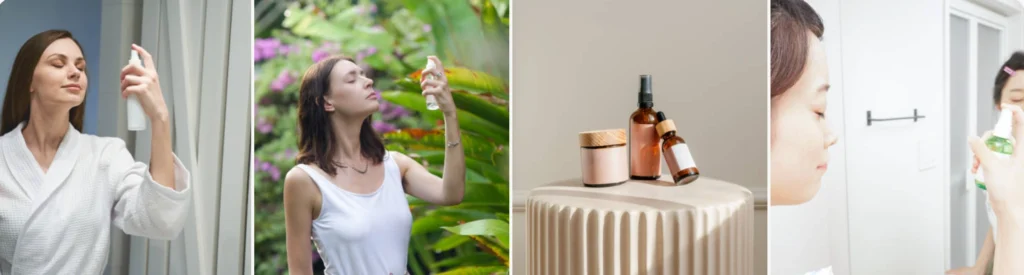
One of the most common skincare mistakes is spraying water onto dry skin and expecting it to provide lasting hydration by itself.
A facial mist adds water. A moisturizer helps hold water in the skin and reduce how quickly it evaporates.
Most effective moisturizers combine one or more of the following:
| Moisturizer component | Main role |
|---|---|
| Humectants | Attract and hold water in the outer skin |
| Emollients | Fill rough spaces and make skin feel smoother |
| Occlusives | Form a layer that slows water loss |
| Barrier-supporting lipids | Help support the skin’s protective structure |
A mist made mainly from mineral water may not contain enough humectant, emollient, or occlusive material to perform these jobs for long. If it is sprayed onto very dry skin and left to evaporate completely, the refreshed feeling may disappear quickly.
The better approach is to use the mist as a moisture step rather than the whole moisturizing routine.
Dermatologists commonly recommend applying moisturizer while skin is still slightly damp because the moisturizer helps trap some of that water. The American Academy of Dermatology’s dry-skin advice supports moisturizing soon after washing, while moisture remains on the skin.
This is where Skinpres.T may make the most sense. Spray it onto clean skin, wait a few seconds, and apply moisturizer before the face becomes completely dry.
People who are unsure whether they are dealing with oiliness, dryness, or seasonal dehydration can also review Hotscope’s guide to seasonal skin adaptation beyond basic summer and winter advice. The same product can feel useful in a dry heated room and unnecessary during a humid week.
The Best Way to Use Skinpres.T in a Routine
A mineral mist is flexible, but using it randomly throughout the day does not always provide the best result. Its place in your routine should depend on what you are trying to achieve.
After Cleansing
This is usually the most useful time to apply it.
Wash the face with a gentle cleanser, rinse thoroughly, and pat away excess water without rubbing the skin completely dry. Hold the mist far enough away to cover the face evenly rather than soaking one area.
Spray a light layer, then apply your regular serum or moisturizer while the skin is still slightly damp.
This method can be particularly comfortable after foaming cleansers, hard water, or cold-weather washing, although persistent tightness may mean the cleanser itself is too harsh. A facial mist should not be used to compensate for a product that repeatedly leaves the face stinging or stripped.
For a fuller preparation and removal routine, Hotscope’s guide to caring for skin and hair before and after makeup explains how cleansing, moisturizing, and product removal work together.
Between Skincare Layers
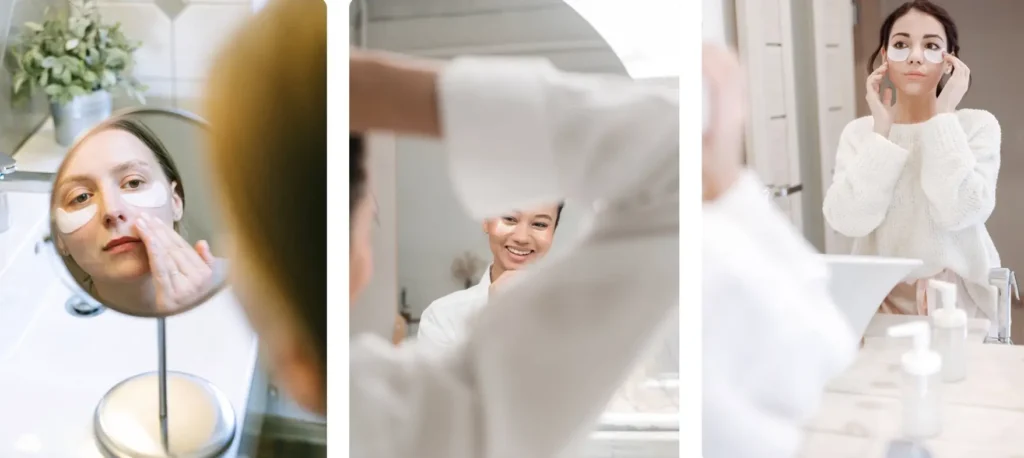
Some people like applying a light mist before a hydrating serum, especially when the serum contains humectants.
This can work well, but more layers are not always better. A face that is dripping wet may dilute products, cause pilling, or make sunscreen apply unevenly.
Use one or two light sprays. The skin should feel softly damp rather than soaked.
Before Moisturizer
Dry and dehydrated skin usually gets the most value when the mist is followed quickly by a cream or lotion.
For oily skin, a lightweight gel moisturizer may be enough. For dry skin, a richer cream may be needed. The mist does not determine which moisturizer is right. Your skin type, climate, sensitivity, and existing routine do.
Over Makeup
A fine mist may help powder products look less dry or flat, but it is not automatically a setting spray.
Setting sprays are formulated to improve wear, finish, or resistance to transfer. A mineral mist mainly adds moisture. It may soften a powdery look, but too much can break apart foundation, create spots in mascara, or reduce wear.
Hold the bottle farther from the face and use a very small amount. Allow it to settle without rubbing.
Hotscope’s article on makeup that does not feel heavy on the face may also help readers who are trying to reduce layers rather than repeatedly refreshing uncomfortable makeup.
During Travel or Air-Conditioned Days

Flights, heated rooms, and air conditioning can make the skin feel tight. A mist offers quick comfort, but frequent spraying without moisturizer may not be enough for genuinely dry skin.
For travel, use the mist before a small amount of moisturizer rather than spraying the face every few minutes. Also avoid touching the nozzle with unwashed fingers or letting it contact the skin.
After Exercise
Do not spray mineral water over a mixture of sweat, sunscreen, dust, and makeup and consider the skin clean.
After exercise, gently cleanse or rinse the face when possible. Then use the mist and moisturizer. If washing is not practical, blot sweat with a clean cloth first and avoid layering repeated sprays over visibly dirty skin.
Who May Like This Mist and Who Should Be Careful?
Skinpres.T may appeal to people who prefer simple textures, dislike fragrance, or want a quick moisture step without adding another heavy cream.
Dry or Dehydrated Skin
Dry skin lacks enough oil, while dehydrated skin lacks water. A person can have oily yet dehydrated skin, which is why shine does not always mean the face has enough moisture.
A mineral mist may help reduce tightness temporarily, but dry skin usually needs an emollient or occlusive moisturizer afterward. Without that follow-up step, the effect may feel brief.
Oily or Combination Skin
People with oily skin sometimes avoid all moisture because they fear making shine worse. A lightweight mist can feel more acceptable than a heavy product, but it still should not replace an appropriate moisturizer.
Choose a non-comedogenic moisturizer and adjust the amount by area. The cheeks may need more support than the forehead and nose.
Sensitive Skin
A fragrance-free, short formula may reduce the number of potential triggers, but no product can be guaranteed irritation-free for every person.
Sensitive skin can react to minerals, packaging contamination, other products underneath, or an already weakened barrier. Test the product before using it across the whole face.
The American Academy of Dermatology recommends testing new skincare products on a small area twice daily for seven to ten days before wider use.
Acne-Prone Skin
A simple water-based mist may feel lighter than oily sprays, but it is not an acne treatment.
It will not unclog pores, control acne-causing processes, or replace proven ingredients recommended by a dermatologist. Stop using it if you notice increased bumps, itching, or redness.
Eczema, Rosacea, or an Injured Barrier
People with eczema, rosacea, open skin, recent procedures, or persistent inflammation should be more cautious.
Even plain water can sting when the barrier is badly disrupted. Mineral content that feels soothing to one person may feel uncomfortable to another.
Do not spray it over open wounds, infected areas, severe rashes, or immediately after a strong peel, laser treatment, microneedling, or another procedure unless the professional who performed the treatment approves it.
Looking Closely at “Chemical-Free” and “Preservative-Free” Claims
Some Skinpres.T listings use phrases such as “chemical-free,” “preservative-free,” and “100% natural.”
These phrases sound reassuring, but they need context.
Everything in skincare, including water, salt, magnesium, and oxygen, is made of chemicals. “Chemical-free” is therefore a marketing phrase rather than a scientifically precise description.
“Natural” is also not a guarantee of safety. Poison ivy is natural, while many carefully tested cosmetic ingredients are synthetic. What matters is the identity of each ingredient, its concentration, product quality, contamination control, packaging, and how it is used.
“Preservative-free” can be attractive to people who react to particular preservatives, but preservatives have an important job. They help limit the growth of microorganisms in products containing water.
A preservative-free mist needs packaging and manufacturing that protect the formula from contamination. Users should avoid opening, refilling, diluting, or touching the nozzle to the face. The bottle should be discarded if the smell, spray, appearance, or container changes.
FDA guidance notes that cosmetic claims must not be false or misleading, even though cosmetic labeling claims are not individually preapproved by the agency. Read the FDA’s guidance on cosmetic labeling claims.
Before buying, look for a complete ingredient list on the physical package. Public listings for Skinpres.T are not always equally detailed, so the bottle and outer packaging should be treated as the main reference. Product claims should also be checked against the seller, batch information, expiration details, and manufacturer information.
Hotscope’s honest review of current beauty trends offers a useful principle here: a beauty product should be judged by what it adds to a routine, not by how unusual or fashionable its marketing sounds.
Mineral Mist, Toner, Essence, or Setting Spray?
These products are often placed in similar bottles, but they do different jobs.
| Product | Main purpose | What it usually contains | Can Skinpres.T replace it? |
|---|---|---|---|
| Mineral mist | Quick moisture and refreshment | Water and minerals | This is its main role |
| Hydrating toner | Prepares skin and adds hydration | Water, humectants, soothing ingredients | Sometimes, but the mist may be simpler |
| Exfoliating toner | Removes dead surface cells | Acids such as glycolic or salicylic acid | No |
| Essence | Adds targeted hydration or treatment ingredients | Humectants, ferments, extracts, actives | No, unless you only want basic moisture |
| Serum | Targets a specific concern | Concentrated active ingredients | No |
| Moisturizer | Reduces moisture loss and softens skin | Humectants, emollients, occlusives | No |
| Setting spray | Helps makeup wear or changes its finish | Film-formers, solvents, humectants | Not reliably |
| Thermal-water spray | Refreshes and supplies source-specific minerals | Thermal spring water | Similar category, but mineral profiles differ |
This comparison prevents a common shopping mistake. A person may buy a facial mist expecting it to replace toner, serum, moisturizer, and setting spray at the same time. When it does not, the product seems disappointing even though it may be performing its actual job correctly.
Skinpres.T is more likely to satisfy someone who wants one simple moisture step than someone looking for dramatic changes in pigmentation, acne, fine lines, or skin firmness.
Common Mistakes That Make the Mist Less Useful
The first mistake is using too much. A face covered in large wet droplets does not receive better care than one covered in a light, even layer. Excess water takes longer to evaporate and may disturb products underneath.
The second mistake is allowing the mist to dry completely on very dry skin without following with moisturizer. The skin may initially feel fresh and then return to the same tight state.
The third mistake is expecting it to repair a routine built around harsh products. If strong cleansers, frequent acids, rough scrubs, or aggressive acne treatments are damaging the barrier, a mist may offer temporary comfort without correcting the cause.
The fourth mistake is spraying over unclean skin throughout the day. Sweat, pollution, sunscreen, makeup, and oil remain on the face. A mist does not cleanse them away.
The fifth mistake is using it as sunscreen. Mineral water offers no reliable ultraviolet protection. Sunscreen remains necessary during the day.
The sixth mistake is storing the bottle badly. Heat, direct sunlight, a dirty bathroom shelf, and a damaged nozzle can affect the condition of the product.
The seventh mistake is sharing it. The spray may not touch the skin during normal use, but people can still touch the nozzle or hold the bottle against the face. Personal skincare products should be handled with clean hands and kept in clean storage.
The eighth mistake is believing that tingling means the minerals are working. Burning, ongoing itching, redness, or swelling are reasons to rinse the product away and stop using it.
How to Decide Whether Skinpres.T Is Worth Buying
A facial mist is worth buying when it solves a real problem in your routine.
Skinpres.T may be a sensible choice when:
- Your skin feels tight after cleansing
- You want a fragrance-free facial spray
- You prefer a simple routine
- You need a lightweight step before moisturizer
- Powder makeup often looks dry
- You spend long periods in dry indoor air
- You enjoy facial mists and will use the bottle consistently
It may not be worth buying when:
- Your moisturizer already keeps your skin comfortable
- You expect treatment-level results
- You want acne, pigmentation, or wrinkle correction
- You dislike adding optional steps
- Your skin reacts to many water sprays
- The full ingredient label or seller information is unclear
- The product is priced much higher than similar mineral or thermal-water sprays
The best test is not whether the product feels luxurious during the first spray. Ask whether your skin remains more comfortable, whether it helps your moisturizer spread, whether it works under your makeup, and whether you continue reaching for it after several weeks.
A facial mist should make the routine easier, not give you another product to remember without a clear reason.
Final Note
The secret behind Skinpres.T Mineral Healing Mist is not a hidden medical treatment. It is the combination of a simple deep-sea-water concept, a fine spray, and an easy place in a basic moisturizing routine.
Its strongest role is helping the skin feel refreshed and lightly damp before moisturizer. Mineral-water research gives the category some scientific interest, but evidence involving other seawater or thermal-water preparations cannot prove that this specific mist heals skin conditions.
Use the word “healing” carefully. Think of the product as a supportive cosmetic, not a cure. Check the full label, patch test when your skin is reactive, keep the nozzle clean, and follow the mist with moisturizer when dryness is the real concern.
A good facial mist does not need to perform miracles. It only needs to make the skin feel more comfortable, fit naturally into the routine, and do its small job well.