

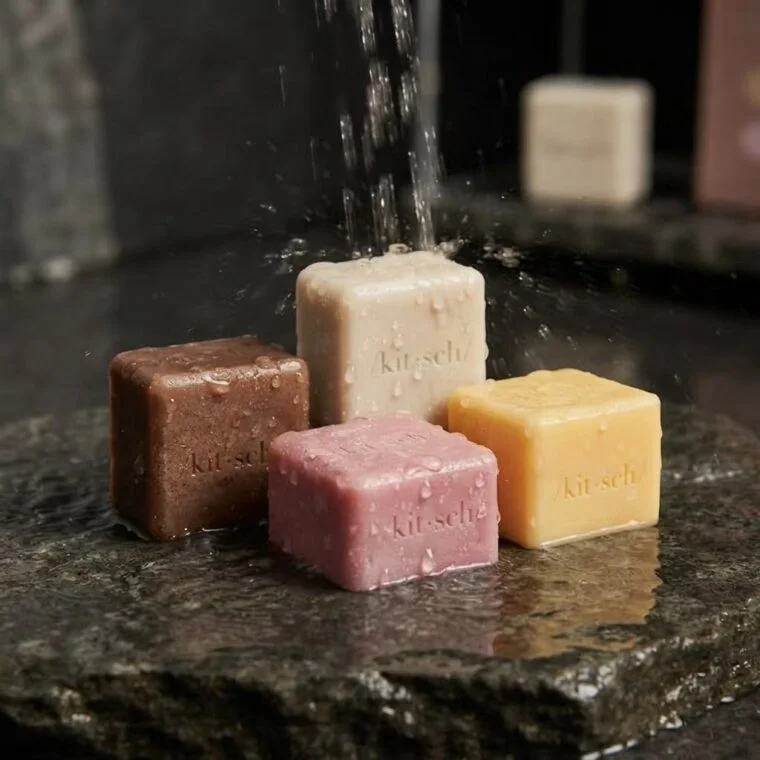
Bottle-Free Beauty 4pc Sampler Set
Kitsch Bottle-Free Beauty 4pc Sampler Set is a compact introduction to solid shampoo and conditioner bars, combining four mini formulas with noticeably different hair-care roles. The set contains Rice Water Strengthening Shampoo, Rice Water Strengthening Conditioner, Castor Oil Nourishing Shampoo, and Coconut Oil Deep-Moisturizing Conditioner, giving shoppers two cleansing bars and two conditioning bars rather than four variations of the same product.
All four formulas are currently marketed without parabens, phthalates, silicones, sulfates, or artificial fragrance. They do contain plant-derived natural fragrance, however, so “no artificial fragrance” should not be interpreted as fragrance-free. The solid format also makes this set an interesting alternative for anyone comparing conventional products in HotScope’s Hair Care collection or more specifically within Shampoo & Conditioner.
Bottle-Free Beauty 4pc Sampler Set Features
- Brand: Kitsch
- Product type: Solid shampoo and conditioner sampler
- Pack size: 4 mini bars
- Included shampoo bars: Rice Water Strengthening Shampoo and Castor Oil Nourishing Shampoo
- Included conditioner bars: Rice Water Strengthening Conditioner and Coconut Oil Deep-Moisturizing Conditioner
- Product form: Water-free solid bars
- Hair positioning: Suitable across a variety of hair types
- Rice Water pair: Focused on strengthening, shine, and fuller-looking hair
- Castor Oil Shampoo: Focused on cleansing with added conditioning character
- Coconut Oil Conditioner: Richer moisture-focused formula
- Silicones: None listed
- Sulfates: None listed
- Parabens: None listed
- Phthalates: Marketed as phthalate-free
- Artificial fragrance: None, although natural fragrance is present
- Color-treated hair: Kitsch currently describes all four bars as color-safe
- Ulta item number: 2623680
- Format advantage: No conventional liquid shampoo or conditioner bottle is required for the bars themselves
The sampler is useful because the formulations are genuinely different. The Rice Water shampoo and Castor Oil shampoo share the same basic cleansing architecture, while the conditioners rely more heavily on fatty alcohols, cationic conditioning agents, and plant oils.
Two Shampoo Bars With A Concentrated Surfactant Base
Both shampoo bars use sodium cocoyl isethionate and sodium methyl cocoyl taurate as their principal cleansing ingredients. They are surfactants, meaning they help water interact with scalp oil, styling residue, and other material so it can be rinsed away.
This is an important distinction because a solid shampoo bar does not need to be traditional soap. Modern solid cleansers can be made with concentrated cosmetic surfactants and are sometimes described as syndet-style bars.
The NIH overview of hair cosmetics explains that surfactants are central to shampoo performance because they remove sebum and soil while the rest of the formulation influences characteristics such as conditioning, manageability, and hair-shaft feel.
Kitsch also adds vegetable glycerin, hydrogenated castor oil, and guar hydroxypropyltrimonium chloride to both shampoo bars. That means the shampoos are not simply compressed detergent. Humectant and conditioning ingredients are included to influence how the hair feels after cleansing.
Someone comparing that compact solid system with a conventional bottled formula can look at HotScope’s Native Shampoo, where the liquid format creates a very different ingredient and application structure.
Rice Water Strengthening Shampoo Adds Hydrolyzed Rice Protein
The distinguishing ingredient in the Rice Water Strengthening Shampoo is hydrolyzed rice protein. Its current formula includes sodium cocoyl isethionate, sodium methyl cocoyl taurate, vegetable glycerin, hydrogenated castor oil, cationic guar, hydrolyzed rice protein, natural fragrance, and mineral-derived color.
Hydrolyzed proteins are broken into smaller protein fragments so they can be incorporated effectively into cosmetic formulations. In hair care, these materials are commonly used to improve the feel of damaged fibers, influence film formation, and support the cosmetic appearance of body or strength.
Kitsch markets its rice-protein bars around strengthening and volume. The current retailer description cites a 20% hair-volume increase after five washes, but that is a brand performance claim and should not be converted into a universal promise that every person’s hair will become exactly 20% thicker.
It is also worth separating rice protein from more general “rice water grows hair” claims. A systematic review indexed by PubMed on rice-derived products and hair found promising laboratory evidence for certain rice-derived materials while also highlighting the limited clinical evidence available.
For someone primarily interested in immediate cosmetic volume rather than the solid-bar format, HotScope’s Bamboo and Hibiscus Volumizing Shampoo provides a useful comparison with a different formulation approach.
The Hair-Growth Language Needs A Careful Read
Kitsch currently uses phrases around encouraging overall hair length and density when describing its Rice Water Strengthening Shampoo. A product page should not turn that wording into a claim that the shampoo medically treats hair loss.
Hair length can improve cosmetically when strands experience less breakage, because more of the existing fiber remains intact over time. That is different from causing new follicles to form or treating androgenetic alopecia.
The FDA explains in its guidance on cosmetic versus drug claims that a conventional shampoo used to cleanse hair is a cosmetic, while claims to restore hair growth can place a product into drug territory.
For HotScope, the more defensible positioning is therefore strengthening, breakage-conscious care, shine, cleansing, and fuller-looking hair, rather than describing these mini bars as proven hair-loss treatments.
Castor Oil Nourishing Shampoo Takes A Simpler Route
The second shampoo contains the same core surfactant pair but removes hydrolyzed rice protein from the formula. Instead, the focus shifts toward hydrogenated castor oil, glycerin, and cationic guar alongside the cleansing base.
The result is a useful comparison inside the same sampler.
Someone whose hair responds well to protein-containing products can test the Rice Water bar. Someone who mainly wants a straightforward solid cleanser with conditioning support may prefer the Castor Oil bar.
Castor oil should still be viewed realistically. Its presence helps shape the conditioning and emollient character of the bar, but a rinse-off shampoo containing castor oil should not automatically be presented as a clinically established hair-growth treatment.
The FDA’s current hair-cleansing product information is particularly relevant here because it recommends stopping a cleanser when significant scalp irritation, rash, breakage, or unexpected hair loss develops rather than assuming a reaction is part of an adjustment period.
Rice Water Strengthening Conditioner Uses A Very Different Base
The Rice Water conditioner no longer needs the surfactant-heavy architecture of the shampoo.
Its current formula begins with cetearyl alcohol and behentrimonium chloride, followed by coconut oil, sunflower seed oil, lauryl laurate, guar hydroxypropyltrimonium chloride, hydrolyzed rice protein, and plant-derived fragrance.
Cetearyl alcohol is a fatty alcohol rather than the type of volatile alcohol commonly associated with a drying sensory feel. It helps give solid conditioners their structure while contributing softness.
Behentrimonium chloride is a cationic conditioning ingredient. Positively charged conditioning materials are widely used because they can improve lubrication, reduce static, and make hair easier to detangle.
Cationic guar adds another conditioning layer. Research on cationic guar interaction with human hair describes its importance as a conditioning polymer and examines how it deposits onto hair fibers.
The Rice Water conditioner therefore uses hydrolyzed rice protein inside a proper conditioning system rather than relying on protein alone to make the hair feel softer.
Coconut Oil Deep-Moisturizing Conditioner Is The Richest Bar In The Set
The Coconut Oil conditioner takes the most emollient-heavy approach of the four.
Its formula contains cetearyl alcohol, behentrimonium chloride, coconut oil, sunflower seed oil, cocoa butter, shea butter, lauryl laurate, natural fragrance, and cationic guar, along with cosmetic mineral colorants.
Coconut oil, cocoa butter, and shea butter give this bar a noticeably different ingredient profile from the Rice Water conditioner.
That can be useful for hair that feels dry, coarse, or difficult to detangle, although richer formulas can sometimes feel heavier on very fine hair. Hair type, porosity, amount applied, wash frequency, and styling routine all affect whether a richer conditioner feels silky or over-conditioning.
The American Academy of Dermatology’s healthy-hair recommendations likewise note that conditioning needs differ by hair type. Fine or straight hair may need conditioner concentrated toward the ends, while dry or curly hair may benefit from conditioning through more of the length.
For a conventional bottled alternative centered strongly on moisture, HotScope’s Wellness Premium Hydration Conditioner provides a useful comparison.
Mixing The Four Bars Makes More Sense Than Treating Them As Fixed Pairs
Although the Rice Water shampoo and conditioner naturally belong together, Kitsch currently says the sampler products can be mixed and matched according to the hair’s needs.
That is one of the sampler’s better practical advantages.
Fine hair that likes the Rice Water shampoo but finds protein-focused conditioning unnecessary could pair it with a small amount of Coconut Oil conditioner on the ends. Drier hair might prefer Castor Oil Shampoo followed by Coconut Oil Conditioner. Hair that responds well to the rice-protein system can use the Rice Water pair.
This kind of experimentation is easier with four mini bars than buying four separate full-size products before knowing which combination works best.
HotScope’s Shampoo & Conditioner collection follows the same broader logic by allowing cleansing and conditioning products to be compared by hair concern rather than assuming one universal routine works for every texture.
Solid Bars Still Need A Normal Wash-Day Technique
The product format changes, but the basic job of shampoo and conditioner does not.
The bar needs to be wet so the surface can release product. Shampoo can be worked into a lather in wet hands or passed carefully across wet hair before the cleanser is concentrated around the scalp and rinsed thoroughly. Conditioner is distributed more heavily where the lengths need slip and softness before being rinsed away.
The AAD recommends focusing shampoo mainly around the scalp instead of aggressively rubbing cleanser throughout the entire length. This cleans away oil and buildup while reducing unnecessary friction on older parts of the hair fiber.
Conditioner performs the opposite supporting role by coating strands, improving detangling, and helping reduce mechanical damage.
The important point is that a bar should not be scraped repeatedly over fragile hair simply because it is solid. The goal is to transfer enough product for an effective wash, not to create additional friction.
Keeping The Bars Dry Between Washes Matters
Solid hair products behave differently from sealed liquid bottles once they have been exposed to water.
Leaving a wet bar sitting in pooled shower water can soften its surface and cause it to wear away faster. Allowing air to circulate around the bar between washes helps preserve its solid structure.
A draining soap dish, ventilated bar holder, or suitable bar-storage bag can be more practical than placing a wet mini bar directly onto a flat shower shelf.
Each bar should also be easy to identify after the packaging has been opened. Because the sampler contains two shampoos and two conditioners, keeping them separated can prevent accidentally using the wrong bar during the next wash.
This is particularly useful with the two Rice Water products, where the shared name could otherwise make the shampoo and conditioner easy to confuse.
Bottle-Free Does Not Automatically Mean Impact-Free
The sustainability advantage deserves more precision than simply calling the set “zero waste.”
Kitsch’s current bottle-saving claim says that each full-size Bottle-Free Beauty bar can replace the equivalent of two bottles of liquid shampoo or conditioner. That claim applies to the brand’s full-size bars; it should not be copied onto each small sampler piece as though every mini bar individually replaces two full bottles.
The broader environmental idea is still straightforward. A solid concentrate can eliminate the need for the conventional plastic bottle that normally holds a mostly water-based shampoo or conditioner.
The U.S. Environmental Protection Agency notes that containers and packaging form a substantial component of municipal waste and specifically includes cosmetic packaging within its packaging-data category. Its containers and packaging data provides useful context for why reducing unnecessary packaging can matter.
That does not make a solid bar impact-free. Ingredients, manufacturing, shipping, outer packaging, water used during washing, and final disposal all still contribute to environmental impact.
“Bottle-free” is therefore the more accurate product benefit than making unsupported claims such as zero-impact or completely waste-free.
Solid Format Can Be Convenient For Travel
One practical advantage of a mini solid hair-care set is that it does not behave like a bottle of liquid shampoo in a bag.
The TSA specifically permits solid bar soap in both carry-on and checked baggage. While the final decision at a security checkpoint remains with the TSA officer, solid toiletries generally avoid the same container-volume issue that applies to liquids and gels.
That makes the four compact bars useful for travel, particularly when someone wants both shampoo and conditioner options without allocating four liquid bottles inside a toiletries bag.
A person who prefers liquid minis can compare that concept with HotScope’s Hydra Source Mini Travel Set, which takes the opposite approach by putting a shampoo, conditioning balm, and leave-in treatment into miniature liquid containers.
The tradeoff is straightforward: solid bars reduce bottle dependence, while conventional minis may feel more familiar to people accustomed to squeezing or pumping liquid products.
Natural Fragrance Still Counts As Fragrance
The sampler is advertised as free from artificial fragrance, but all four current ingredient declarations include natural fragrance derived from plants.
Those are not contradictory statements.
“No artificial fragrance” describes the fragrance source claim. “Fragrance-free” would indicate the absence of deliberately added fragrance material. This set belongs to the first category, not the second.
Someone whose scalp tolerates fragrance normally may simply view scent as part of the wash experience. Someone with a known fragrance sensitivity should not choose the bars assuming that bottle-free or naturally fragranced means allergen-free.
Ingredient labels remain more useful than broad words such as natural or clean when a specific sensitivity is involved.
Sulfate-Free Does Not Mean Surfactant-Free
This distinction is also important.
The shampoo bars contain no listed sulfate surfactants, supporting Kitsch’s sulfate-free positioning. They still need cleansing agents, however, which is why sodium cocoyl isethionate and sodium methyl cocoyl taurate appear at the beginning of their formulas.
A shampoo without any effective surfactant system would struggle to perform its basic cleansing job.
Sulfate-free therefore tells the shopper which family of cleansers is absent, not that the product contains no detergency or produces no lather.
That makes ingredient-based comparisons more useful than assuming every sulfate-free shampoo will feel equally gentle. Surfactant concentration, formulation pH, supporting conditioners, wash frequency, water hardness, and individual scalp sensitivity all influence the final experience.
Color-Treated Hair Can Still Fade Over Time
Kitsch currently states that all four sampler bars are color-safe. That makes them an option for someone who colors their hair, but “color-safe” should not be interpreted as a guarantee that artificial pigment can never fade.
Color longevity depends on dye chemistry, porosity, previous bleaching, wash frequency, water temperature, UV exposure, and the rest of the hair-care routine.
Someone whose main goal is specifically preserving artificial color may therefore want to compare this sampler with HotScope’s Elvive Color Vibrancy Protecting, where color maintenance is the central product purpose rather than one compatibility feature.
What Makes Bottle-Free Beauty 4pc Sampler Set Different
The strongest feature of this Kitsch set is choice within one small format. It does not ask the shopper to commit immediately to one full-size shampoo bar and one conditioner bar.
The Rice Water Shampoo offers the cleansing system plus hydrolyzed rice protein. The Castor Oil Shampoo uses a simpler protein-free conditioning approach. Rice Water Conditioner combines conditioning agents, plant oils, and hydrolyzed rice protein, while Coconut Oil Conditioner adds cocoa butter and shea butter for a richer moisture profile.
The concentrated solid construction is also meaningful. There are no conventional bottles around the individual bars, and the formulas are compact enough to make experimentation and travel easier.
Most importantly, the set allows hair response to guide the final full-size purchase. Someone can determine whether their hair prefers the Rice Water pair, the richer Castor-and-Coconut combination, or a mixed routine before committing to larger bars.
Final Note
Kitsch Bottle-Free Beauty 4pc Sampler Set is best understood as a four-bar test kit for solid shampoo and conditioner, not simply an eco-themed gift set. Two concentrated shampoo formulas handle cleansing, while two conditioner bars provide different levels and styles of conditioning.
Its Rice Water products add hydrolyzed rice protein, the Castor Oil Shampoo offers a protein-free alternative, and the Coconut Oil Conditioner supplies the richest blend of plant oils and butters in the pack. The formulas avoid silicones, sulfates, parabens, phthalates, and artificial fragrance according to the current product information, although all four remain naturally fragranced.
For shoppers curious about replacing bottled hair care without immediately changing an entire routine, the sampler provides a practical middle step: four small formulas that can be compared against one another while still fitting naturally into the wider range of cleansing and conditioning options available through HotScope’s Hair Care collection.
:::

Reviews
There are no reviews yet.